Last updated November 21, 2026
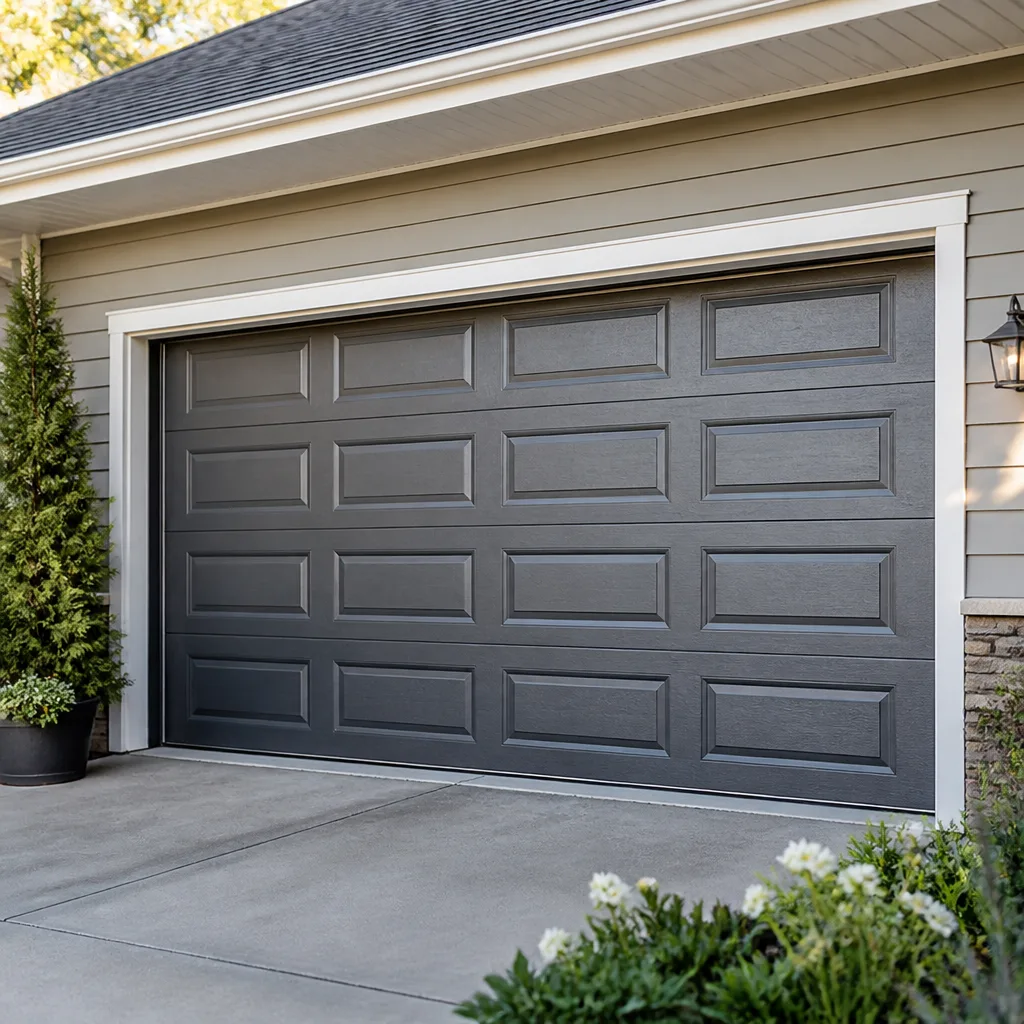 Raised-panel steel
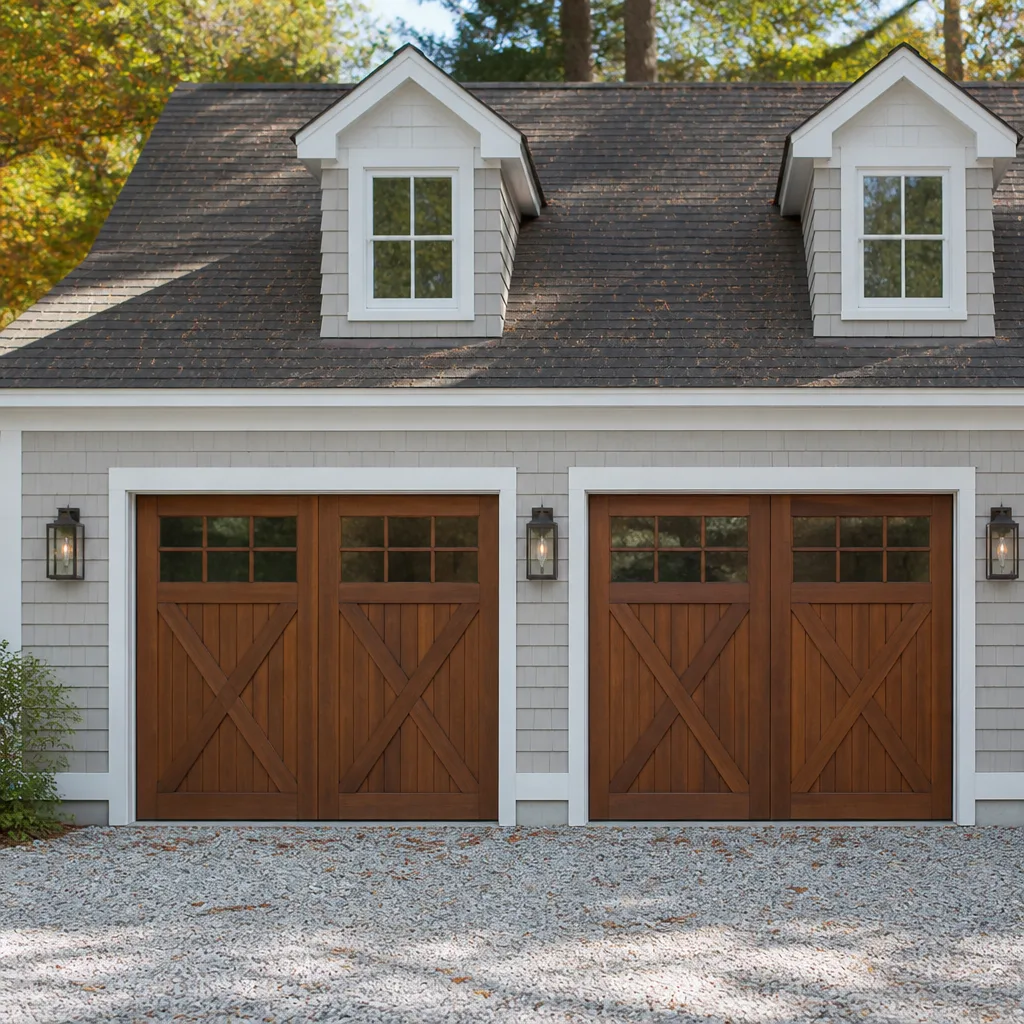 Carriage house
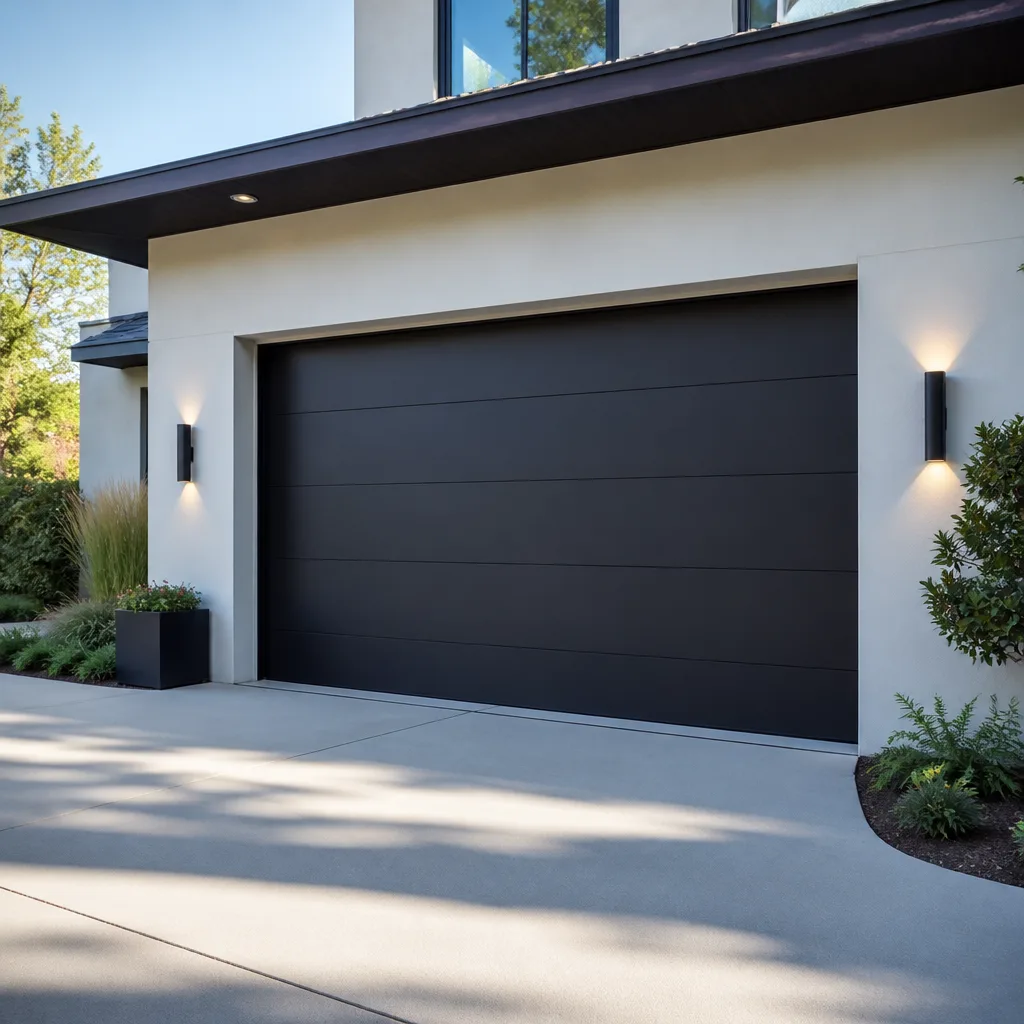 Modern flush
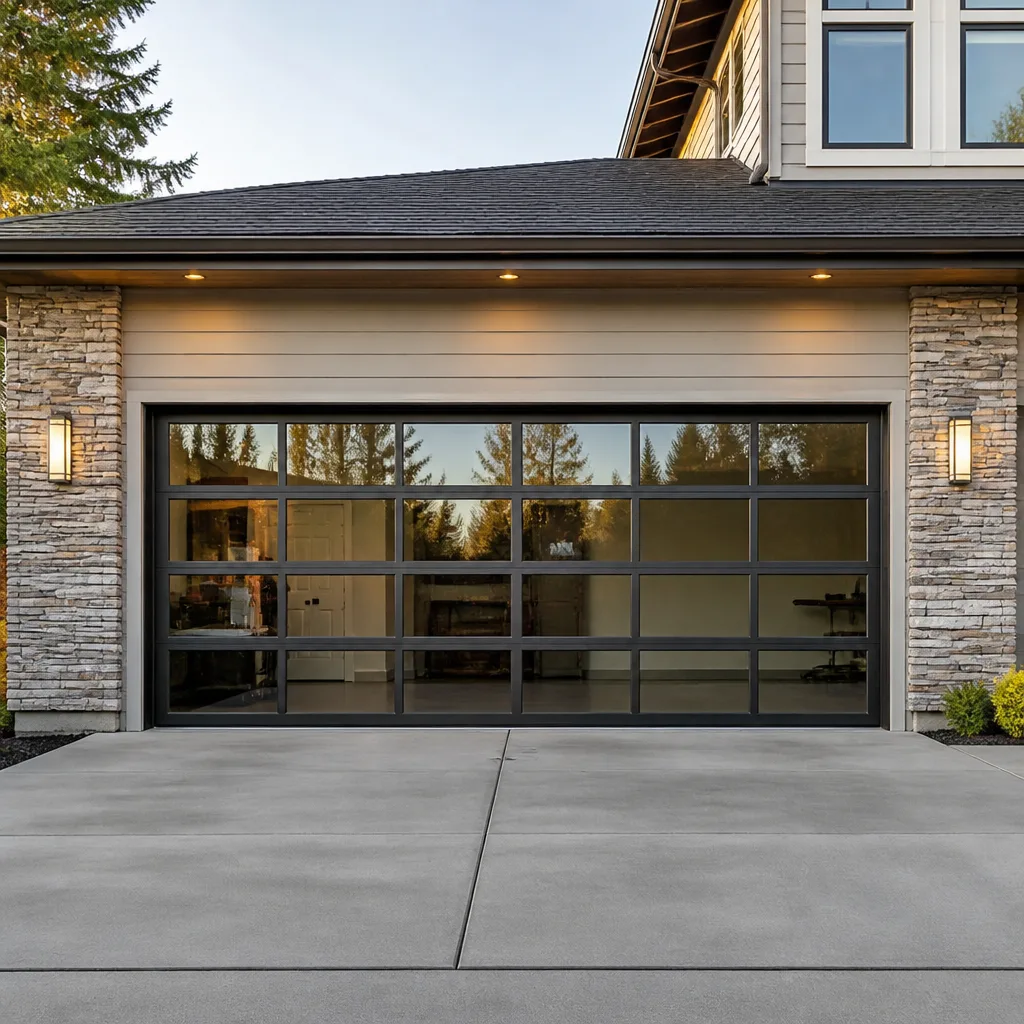 Full-view glass
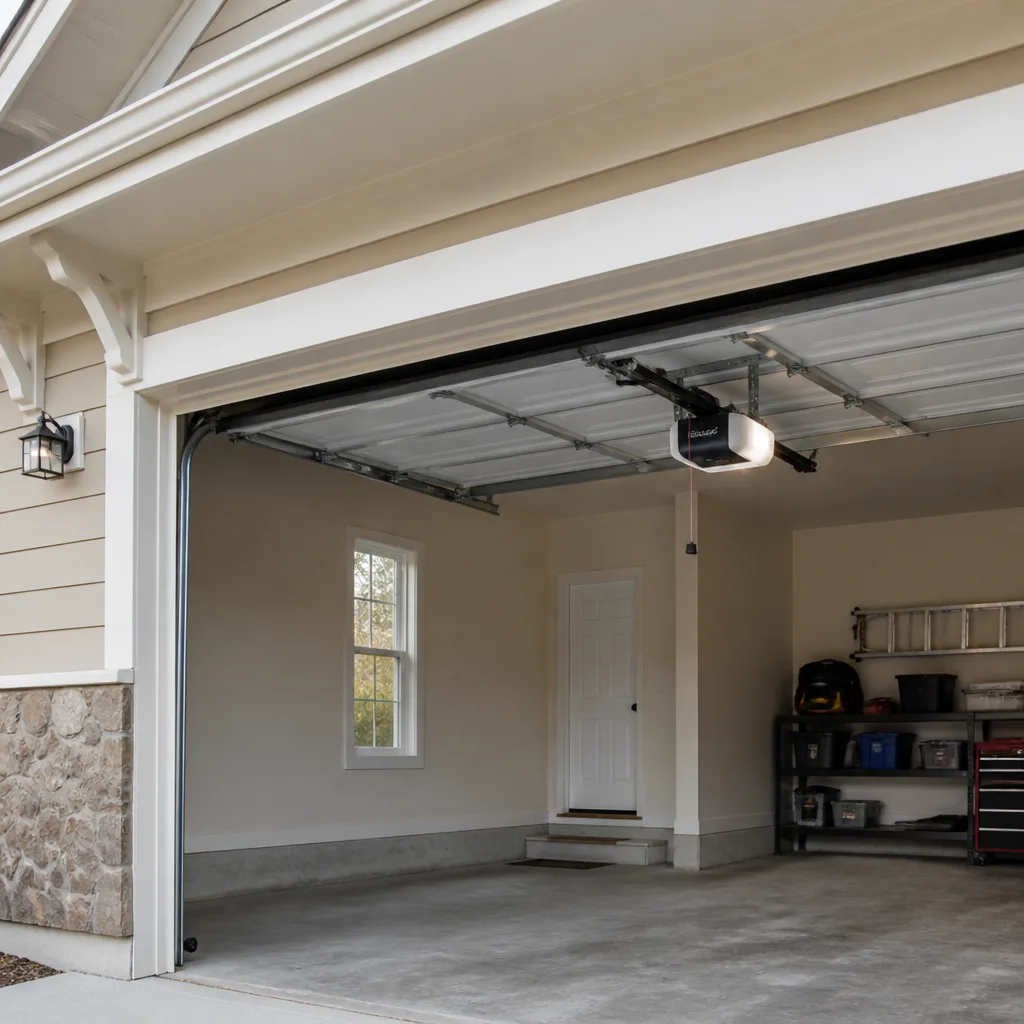 LiftMaster openers
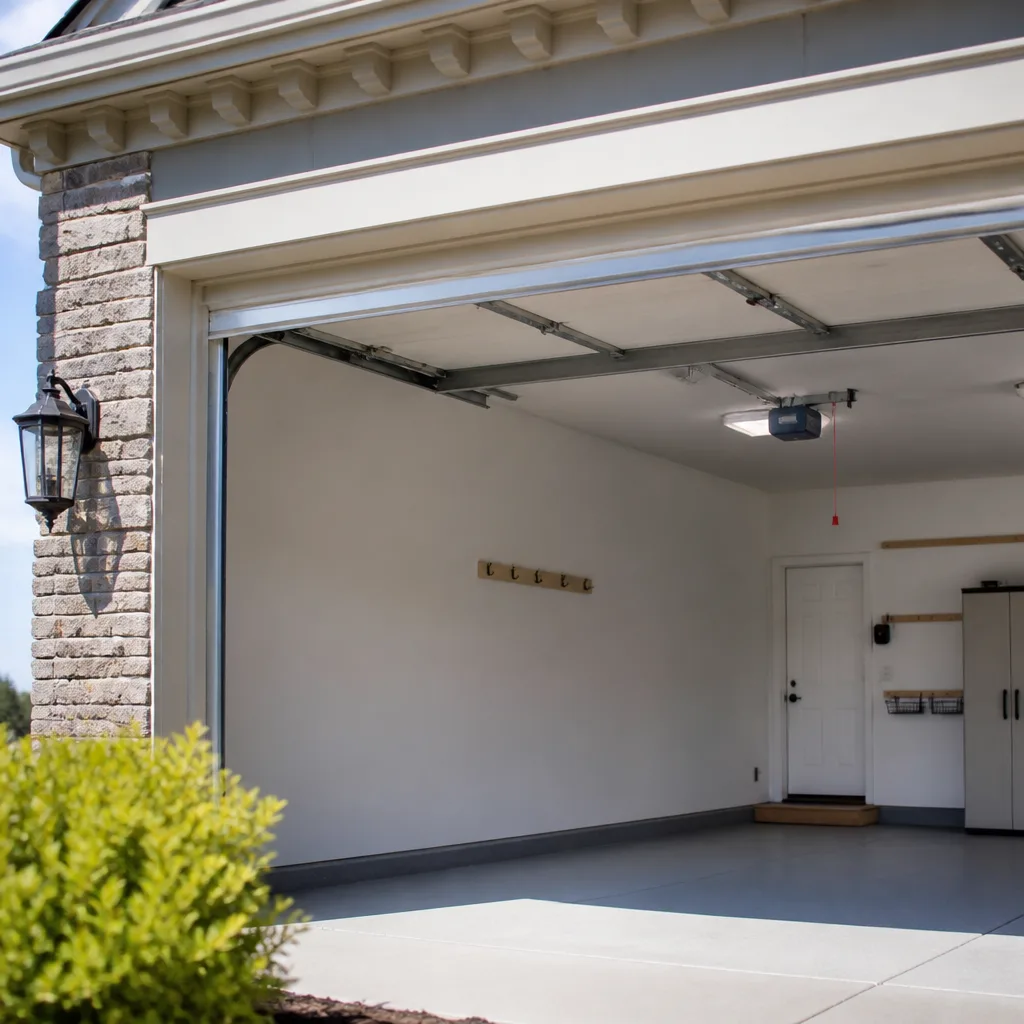 Chamberlain openers
Full 25-point door and opener safety check with every visit - springs, cables, rollers, tracks, and your LiftMaster or Chamberlain opener included
You get a price before we start. It does not change when the pro arrives.
Get your free estimateThe Complete Guide to Garage Doors in Bushwick
Most garage door guides are written for a suburban ranch house with a wide driveway and a deep setback. Bushwick is not that place. Here, a garage door might sit under a converted warehouse on a narrow lot, share a wall with the rowhouse next door, or open onto a tight carriage-house bay where the ceiling is a foot lower than the installer expected. The wrong advice in this housing stock means a door that binds on the tracks, a spring that fails early, or an opener that rattles the whole building every time it runs. This guide maps the decisions Bushwick homeowners actually face, from headroom measurements to opener selection, so you can choose once and choose correctly.
Quick Answer
In Bushwick, the right garage door comes down to three things: measuring headroom and side-room before you buy anything, picking a material that tolerates Brooklyn humidity and street grime, and choosing an opener quiet enough for a shared wall. Get those three right and the door lasts. Get them wrong and you’ll be repairing a problem that was built in from day one.
Styles & brands we work with
- Raised-panel steel
- Carriage house
- Modern flush
- Full-view glass
- LiftMaster openers
- Chamberlain openers
Table of Contents
- How Bushwick’s Housing Stock Shapes Your Garage Door
- Low-Headroom vs. Standard-Headroom: Which Configuration Do You Have?
- Which Door Materials Hold Up in Bushwick?
- Choosing an Opener for a Shared-Wall Building
- Why a Reliable Door Matters More Here Than Almost Anywhere
- What “Full-Service Specialist” Actually Means
- What Garage Door Work Typically Costs in Bushwick
- A Simple Maintenance Routine for Bushwick Doors
How Bushwick’s Housing Stock Shapes Your Garage Door
Bushwick’s buildings were not designed with modern garage doors in mind. The neighborhood grew up around manufacturing, and a lot of that footprint is still here: converted warehouses with deep bays, attached rowhouses with narrow rear carriage houses, and lots that were subdivided long before anyone thought about turning radius or track clearance. A garage door that fits perfectly in a new-build subdivision can be the wrong door entirely in a Bushwick carriage house.
The practical result is that measurement matters more here than almost anywhere. Three dimensions decide what’s possible:
- Headroom: the distance from the floor to the lowest obstruction above the door opening. This determines whether you can use a standard torsion setup or need a low-headroom configuration.
- Side room: the space between the door opening and the nearest side wall. Narrow lots often leave very little, which changes how the torsion shaft and springs can be mounted.
- Backroom: how far the door travels back into the garage when it opens. A shallow converted warehouse bay may not have the depth for a standard sectional door, which pushes you toward a different door type.
In our experience, the carriage-house and converted-warehouse garages in Bushwick are where these constraints bite hardest. A door that seems fine on paper can bind against a wall or scrape a low ceiling once it’s actually hung. Before you buy anything, measure all three dimensions and write them down. Our Garage Door Repair Bushwick team can also measure on site and tell you which configurations fit your specific bay.
Low-Headroom vs. Standard-Headroom: Which Configuration Do You Have?
Headroom is the single most common surprise in Bushwick garage door work. Most people assume any sectional door fits any garage, then find out their ceiling is too low for the tracks they bought. The fix is understanding which configuration you have before you order.
Standard-headroom setups use a torsion spring mounted above the door with full-radius or high-lift track. They’re the most common residential configuration and the easiest to work on. Low-headroom setups use different track geometry and a spring arrangement that makes the door travel back with less overhead clearance. If your garage shares a low ceiling with the floor above, that’s the configuration you’ll likely need.
Here’s how to check before you buy or replace:
- Measure from the floor to the lowest point above the door opening. A typical sectional door needs enough clearance for the horizontal tracks and torsion assembly; a low-headroom kit needs less.
- Look for obstructions like heating ducts, structural beams, or the underside of a stairwell. Older Bushwick carriage houses often have all three.
- Measure the distance from the door opening back into the garage. That’s your backroom, and it limits how far the door can travel.
- Check the side room on each side of the opening. Springs and shafts need space to mount.
- Write down all three measurements and compare them to the door manufacturer’s specifications before purchasing.
Getting the configuration wrong doesn’t just make the door misbehave; it can shorten the life of the springs and the opener. That’s why headroom is the first thing we check when we size a new door for a Bushwick property. If you want professional sizing, our garage door installation team handles the measure and the fit in one visit.
Which Door Materials Hold Up in Bushwick?
Brooklyn’s climate is hard on garage doors. Humidity swings from summer to winter, temperature changes come fast, and street-level grime settles on everything near the road. Add the exhaust and dust that come with a dense urban neighborhood, and you get a fairly aggressive environment for anything made of painted steel or wood.
Here’s how the main door materials perform in Bushwick conditions:
- Steel: the most common choice and the most forgiving. Modern steel doors are galvanized and factory-finished, which handles humidity well. The weak point is the finish: once it scratches, moisture can get under the paint. Touch up chips when you see them.
- Aluminum: lightweight and rust-resistant, which suits humid neighborhoods. It dents more easily than steel, so it’s a better choice for low-traffic carriage-house doors than for a door that sees daily car traffic.
- Wood and wood-composite: beautiful on a converted rowhouse, but they need more upkeep in Brooklyn’s humidity. Wood swells and contracts, which can affect the way the panels sit in the tracks over time. If you go wood, plan on regular refinishing.
- Fiberglass and composite: a middle ground. They resist moisture well and won’t rust, though they can fade with strong sun exposure. Good for a door that’s more decorative than heavily used.
For most Bushwick homes, insulated steel is the practical default: it handles the humidity, keeps the garage space more temperate, and takes a paint touch-up better than wood. If you live in a landmarked building or a converted warehouse with original wood detailing, the decision is more about appearance than durability, and it’s worth talking through options before you commit. We’re fluent across Clopay, Amarr, Wayne Dalton, and Raynor doors, so we can match a material and style to your building.
Choosing an Opener for a Shared-Wall Building
In an attached Bushwick rowhouse, your garage door shares a wall (or two) with the people next door. That changes the opener question. The loudest, most powerful opener on the market can be the wrong choice here because the vibration travels straight through the shared wall. A belt-drive opener runs quieter than a chain-drive unit, which is why it’s usually the better fit for attached buildings, even if it costs a little more.
Here’s what to weigh when you’re picking an opener for a Bushwick home:
- Drive type: belt-drive for quiet operation in shared-wall buildings; chain-drive if noise isn’t a concern and you want the most durable, low-maintenance mechanical option.
- Smart-home features: app control and Wi-Fi connectivity are now standard on modern openers. If you want to check whether the door is up without walking to the garage, this matters.
- Horsepower: match it to the door. Heavier insulated doors need more lifting power than light aluminum carriage-house doors.
- Safety features: reversing sensors and a working safety reverse are essential. Don’t accept an opener without them.
If your existing opener is making grinding, rattling, or humming sounds without moving the door, that’s a repair issue, not a replacement one. Our garage door opener repair team works on the exact brand already in your garage, including LiftMaster, Chamberlain, Genie, and Craftsman. If the unit is failing beyond repair, we can also help you select the right drive type for your building’s noise profile.
Why a Reliable Door Matters More Here Than Almost Anywhere
In a neighborhood where street parking is scarce, the garage isn’t an occasional convenience. It’s the daily difference between circling for twenty minutes and pulling into your own space. That makes a reliable garage door a daily-use critical system, not something you can afford to have down for a week.
The problem is that daily use wears parts faster. Springs cycle every time the door opens and closes, and a door that runs four times a day wears out faster than one that runs once. Openers take the same beating. The tracks, rollers, and hinges accumulate dirt and lose lubrication faster in a busy urban setting.
This is where emergency service actually matters. A door that won’t close on a Thursday night leaves a Bushwick homeowner either dealing with an unsecured garage overnight or scrambling to find someone who can respond. Our emergency garage door response is a core offering, not an add-on we mention and never staff. If a spring breaks or the door comes off its tracks, that’s the kind of failure that needs a technician, not a phone call in the morning.
For those moments, the right move is to call a specialist who knows the equipment. We’ve handled every kind of failure this neighborhood produces, from snapped torsion springs to openers that have simply stopped responding to the remote. When a door fails and can’t wait, that’s what we’re set up for.
What “Full-Service Specialist” Actually Means
A lot of companies advertise garage door service. Fewer actually specialize in it. The difference shows up when the job gets complicated. A handyman with a parts catalog can swap a remote battery and maybe replace a roller, but when a spring needs replacing or an opener needs a diagnosis on a specific brand, the generalist has to guess – or bring in someone else.
A garage door specialist stays with the job from opener diagnostics to full door installation. That matters more than it sounds, because garage door systems are interconnected. A door that isn’t balanced will wear out the opener faster. Springs that are the wrong size for the door’s weight will fail early. When the same team services the whole system, those mismatches get caught instead of becoming the next repair.
Here’s what specializing across the full scope actually gets you:
- Brand-specific diagnosis: we work on the brand already in your garage. That includes coordinated work across LiftMaster, Chamberlain, Genie, Clopay, Amarr, Wayne Dalton, Craftsman, and Raynor systems.
- Legacy and modern equipment: some Bushwick buildings still have mechanical openers from decades past; others have Wi-Fi-connected units that report to a phone. Being fluent in both means we don’t tell you to replace something just because it’s older.
- No handoffs: the same service relationship handles a broken opener today and a full replacement later, without a second contractor coming in at a different price.
- Corner-cutting caught early: when one company installs a door and another adjusts the springs, mistakes get passed along. Full-scope service closes that gap.
That’s also why we treat garage door repair as a long-term relationship rather than a one-off. The more we understand your door’s setup, the better we can help when something changes.
What Garage Door Work Typically Costs in Bushwick
Pricing for garage door work varies by the size of the door, the extent of the problem, and the parts involved. Below are typical ranges for the most common jobs in Bushwick. These are estimates, not final quotes – the written estimate you receive before any work starts sets the price.
- Spring replacement (single spring): typically $180 to $340. Spring prices are for one spring. A matched pair is usually replaced together, so a pair costs about twice that.
- Opener repair: varies by the fault. A remote or sensor issue is on the lower end; a board or motor issue runs higher.
- Opener replacement: depends on the drive type and features you choose, and whether new wiring is needed.
- New door installation: depends on material, size, and configuration. A low-headroom custom door will cost more than a standard steel sectional.
- Track and hardware adjustment: usually in the lower range unless parts need replacing.
- Emergency response: typically includes a service call fee plus the cost of the repair itself.
We quote the price before we start, and the written estimate is the number that stands. If the job turns out to be different once we’re on site, we tell you before we do the additional work. No surprise invoices. For an exact number on your door, call (888) 839-3311 for a free estimate.
A Simple Maintenance Routine for Bushwick Doors
A little upkeep goes a long way in a climate that swings between humid and cold. You don’t need to be handy to do most of it, and it keeps small issues from becoming expensive ones.
- Listen to the door. Grinding, squealing, or rattling means something needs attention. A quiet door is a healthy door.
- Check the balance by disconnecting the opener (with the door fully closed) and lifting the door halfway. It should stay in place; if it drops, the springs need attention.
- Lubricate the rollers, hinges, and springs with a garage door lubricant. Not WD-40 – that’s a solvent, not a lubricant.
- Clear the tracks of grime. Bushwick street dust settles in the tracks, and that grime leads to binding.
- Test the safety reverse. Put an object in the door’s path and confirm it reverses. If it doesn’t, stop using the door until it’s fixed.
- Inspect the weatherstripping at the bottom of the door. Worn stripping lets in water and cold air, which matters in Brooklyn winters.
- Look for rust or paint chips on steel doors. Touch them up before moisture gets under the finish.
Never adjust the torsion springs or cables yourself. Those parts are under high tension, and a mistake can cause serious injury. That’s a job for a trained technician every time.
Common Mistakes to Avoid
- Buying a door before measuring headroom and side room. A door that fits the opening might not fit the garage once the tracks are hung. In Bushwick’s tight carriage houses, that’s an expensive mistake.
- Choosing a chain-drive opener in a shared-wall building. The noise travels through the wall, and your neighbors will hear it. Belt-drive is the better fit for attached rowhouses.
- Replacing one spring when both are worn. Springs wear at the same rate, so replacing one and leaving the other means you’ll be back for the second soon. Matched pairs are usually replaced together.
- Trying to adjust the torsion springs yourself. They’re under hundreds of pounds of tension. One slip is a serious injury risk, and it’s not a job worth learning on.
- Ignoring a door that reverses on its own. A door that reverses without an obstruction is a safety hazard. Stop using it and call a specialist.
- Letting a handyman install a door. A generalist can hang a door, but sizing springs to the door’s weight and tuning the opener takes specialization. A door installed wrong will fail early.
- Skipping the touch-up on a scratched steel door. Bushwick’s humidity finds the bare metal, and rust spreads under the paint faster than you’d expect.
See the difference
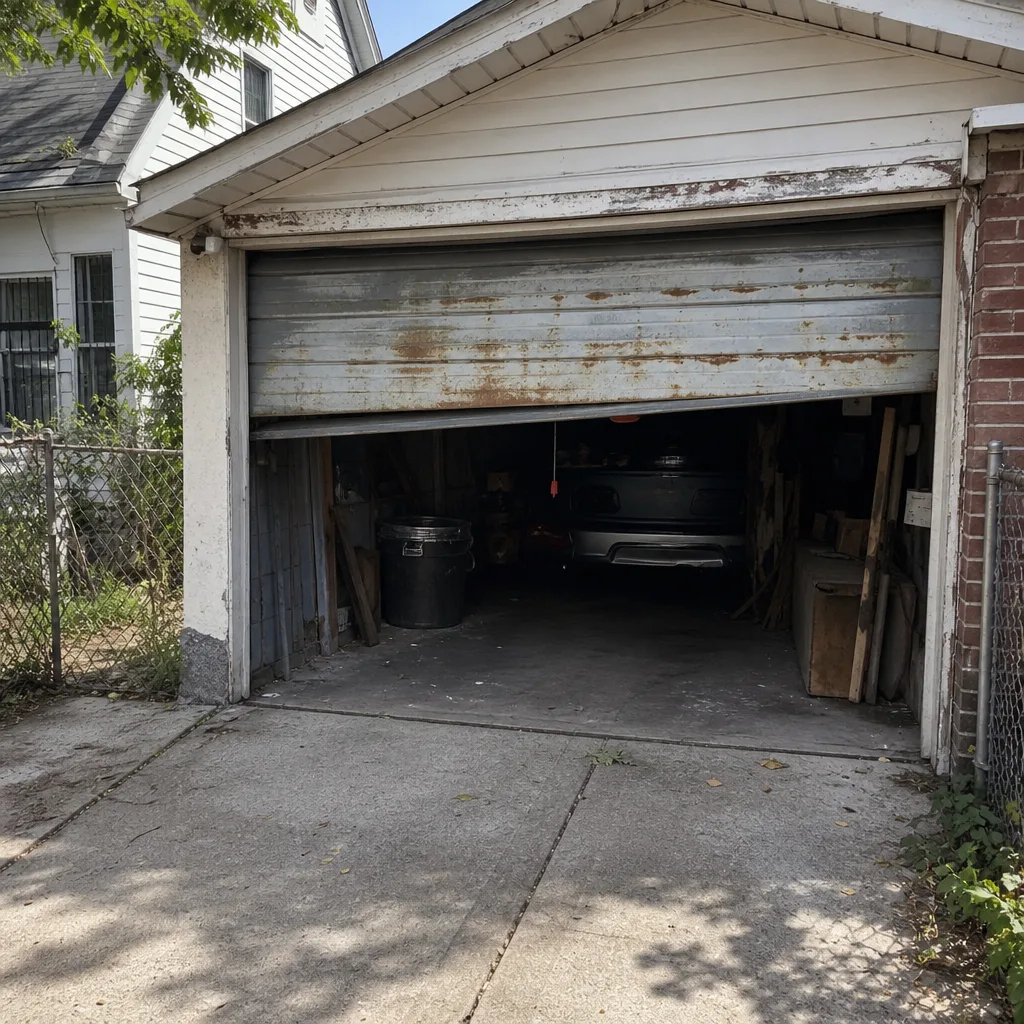 Before
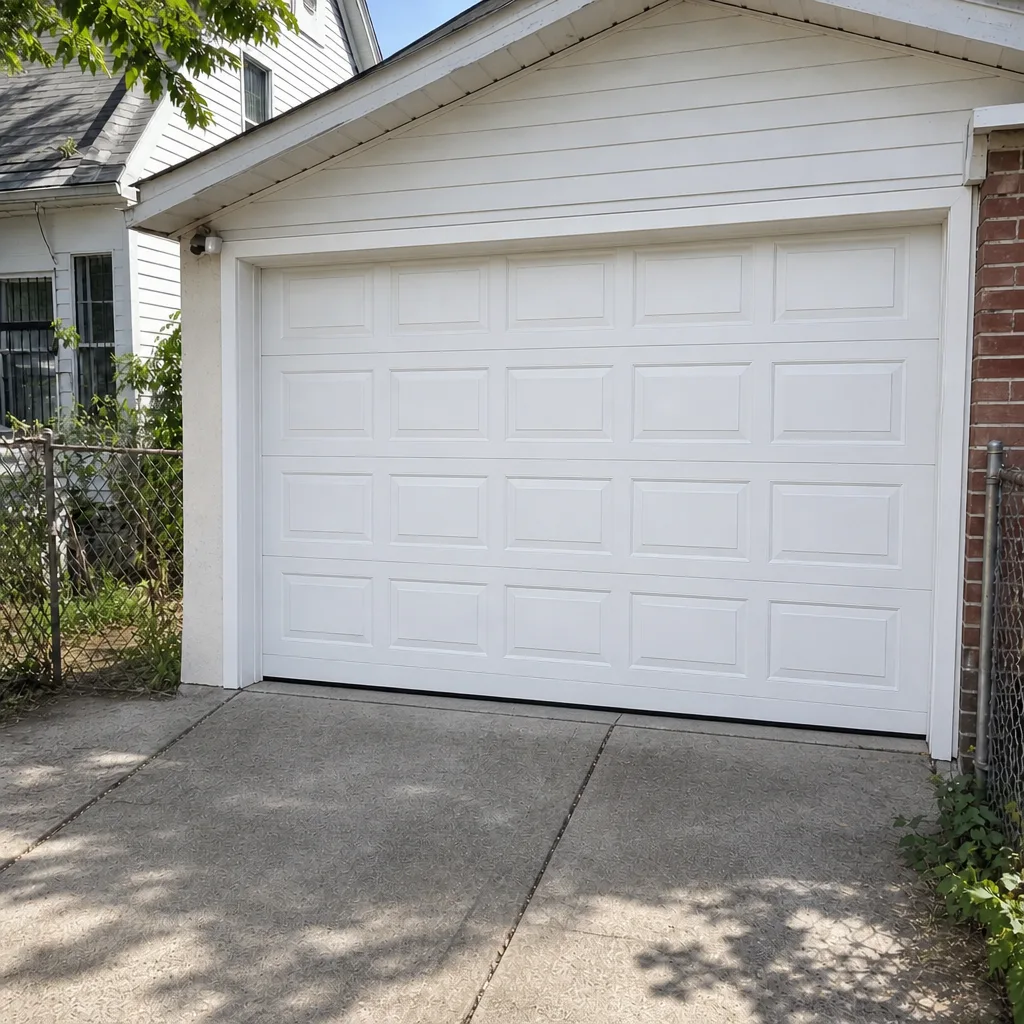 After
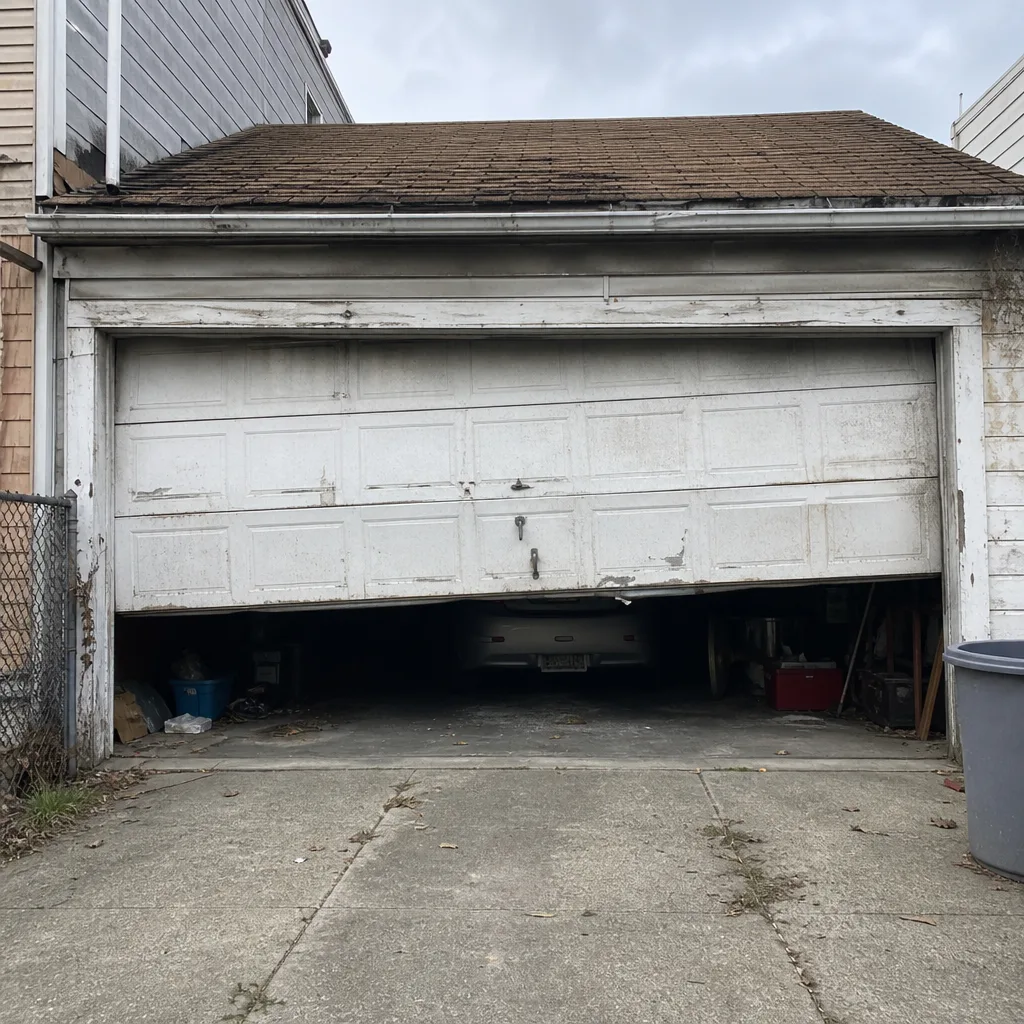 Before
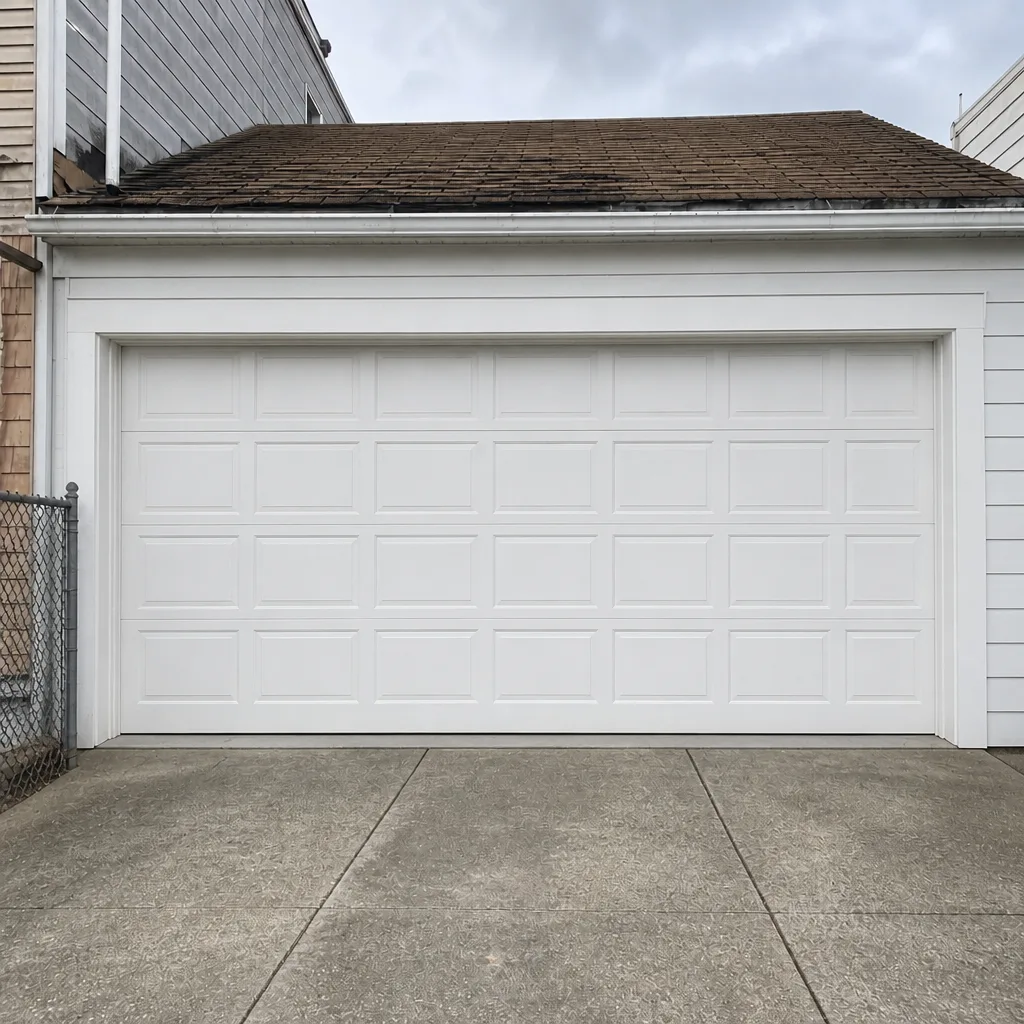 After
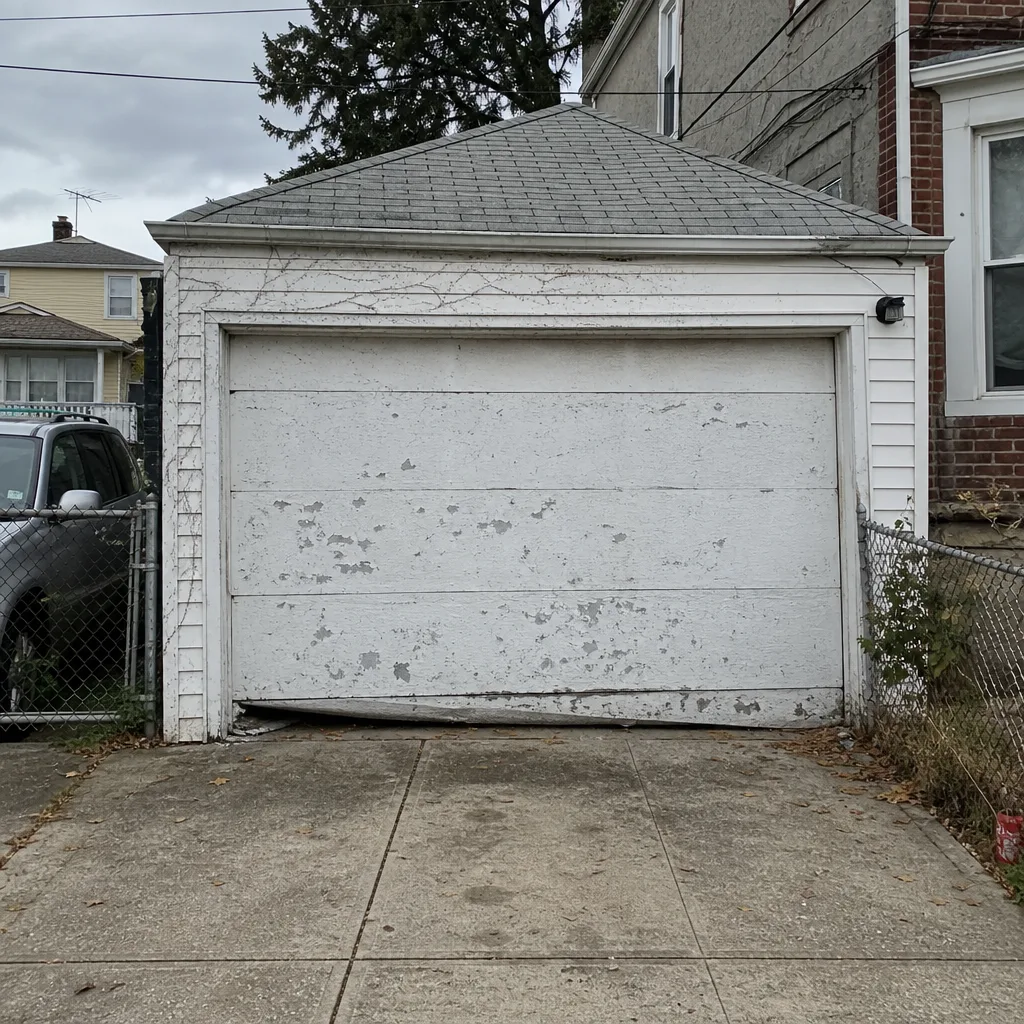 Before
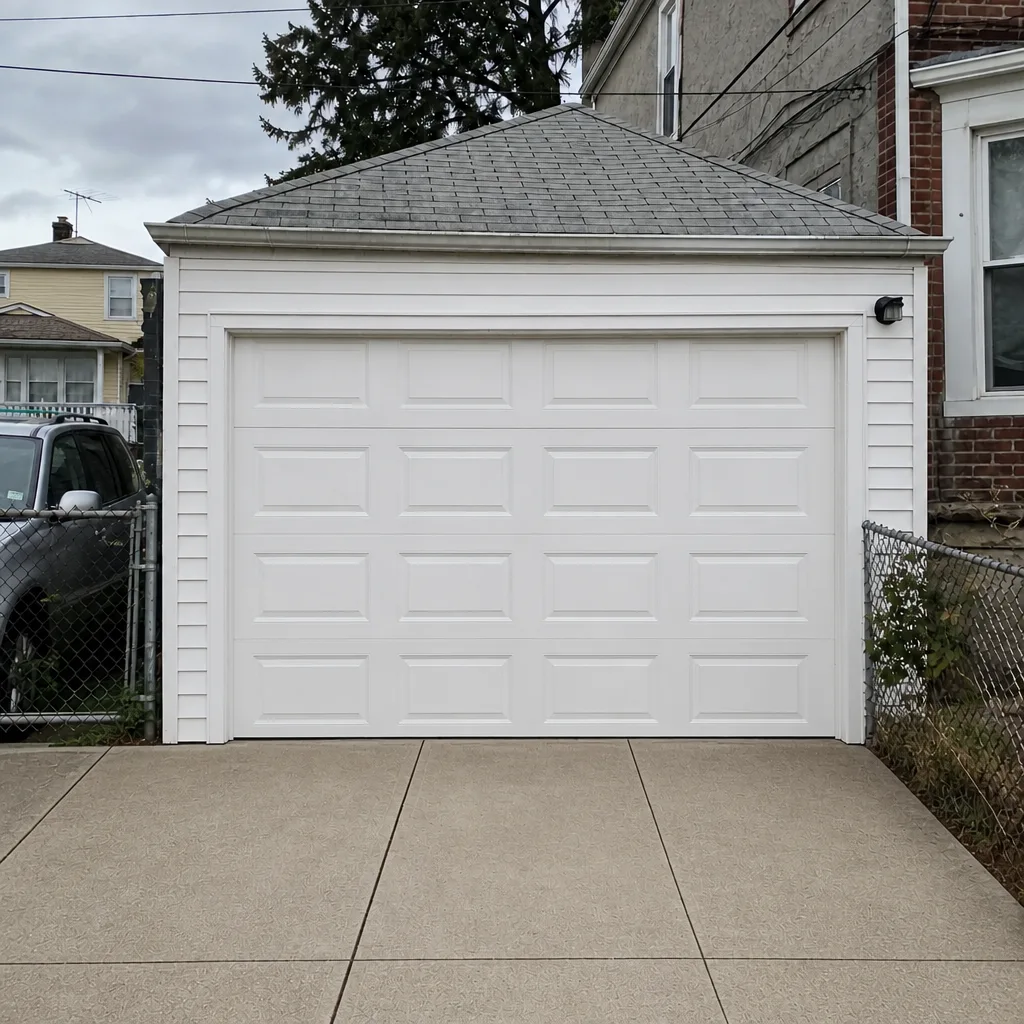 After
When to Call a Professional
Some garage door issues genuinely need a pro. A broken torsion spring or a snapped cable is dangerous and shouldn’t be touched. A door that’s come off its tracks can injure someone if it falls. An opener that smokes, sparks, or trips a breaker needs an electrician’s eye, and a door that reverses without an obstruction is a safety problem that has to be fixed before it’s used again. If a door is binding in the tracks, rattling the building, or refusing to close, that’s also a call for a specialist, not a handyman. Garage Door Repair Bushwick offers free estimates in Bushwick – call (888) 839-3311 to schedule an assessment and get a written price before any work begins.
Frequently Asked Questions
Spring repair in Bushwick typically costs $180 to $340 for one spring, and a matched pair is about twice that. Springs are often replaced in pairs because they wear at the same rate, so the estimate you get may reflect two springs rather than one. Call (888) 839-3311 for an exact quote – estimates are free.
For urgent failures, we can often respond the same day. Emergency garage door response is a core part of our service, not an after-hours afterthought. Call (888) 839-3311 and describe the problem – a technician will tell you what’s involved and when they can arrive.
No, the written estimate you receive before any work starts is the price. If we discover something different once we’re on site, we tell you and get your approval before doing the additional work. No surprise invoices.
We connect you with local professionals who are licensed and insured as their state requires. Our technicians have up to 15 years of experience, and they work on the brand already in your garage, including LiftMaster, Chamberlain, Genie, Craftsman, Clopay, Amarr, Wayne Dalton, and Raynor equipment.
Belt-drive openers are the best fit for attached buildings because they run quieter than chain-drive units. If noise is a concern, tell the technician when you call – drive type is the single biggest factor in how loud your door is.
Yes. Low-headroom configurations are common in Bushwick carriage houses and converted warehouse bays, and they need different track and spring geometry than a standard setup. We measure headroom, side room, and backroom before recommending a door, then install it to fit. Call (888) 839-3311 for a free measure and a written price.
The Bottom Line
Bushwick isn’t a suburban garage market, and treating it like one creates problems that show up months later. Measure your headroom and side room before buying. Choose a material that handles Brooklyn humidity. Pick an opener that won’t rattle through a shared wall. Keep the springs and tracks in good shape, and call a specialist the moment something doesn’t sound right. A door that’s sized, installed, and maintained correctly will hold up to daily use in this neighborhood for a long time. Our technicians have up to 15 years of experience with the brands already in Bushwick garages, and we handle everything from a single spring to a full door replacement. Call (888) 839-3311 for a free estimate.
Written by the team at Garage Door Repair Bushwick.