Last updated November 21, 2026
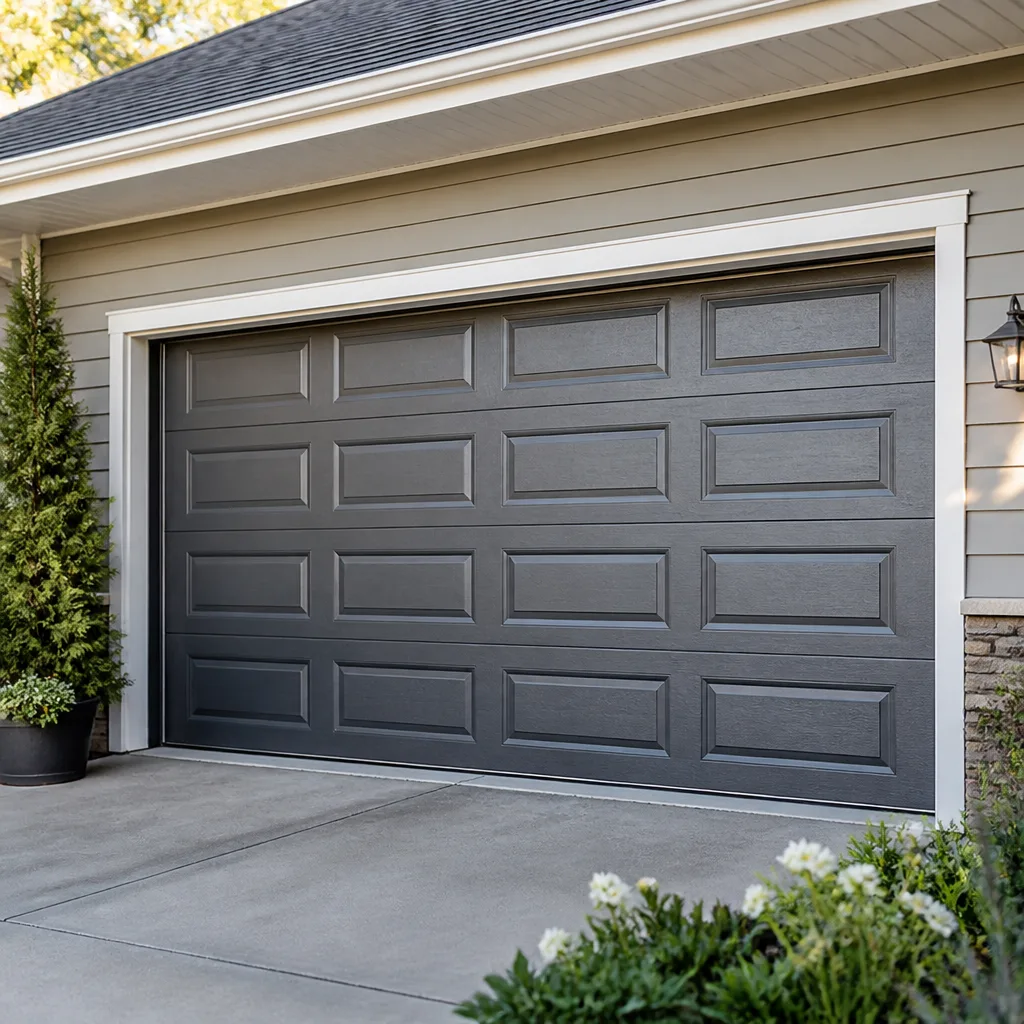 Raised-panel steel
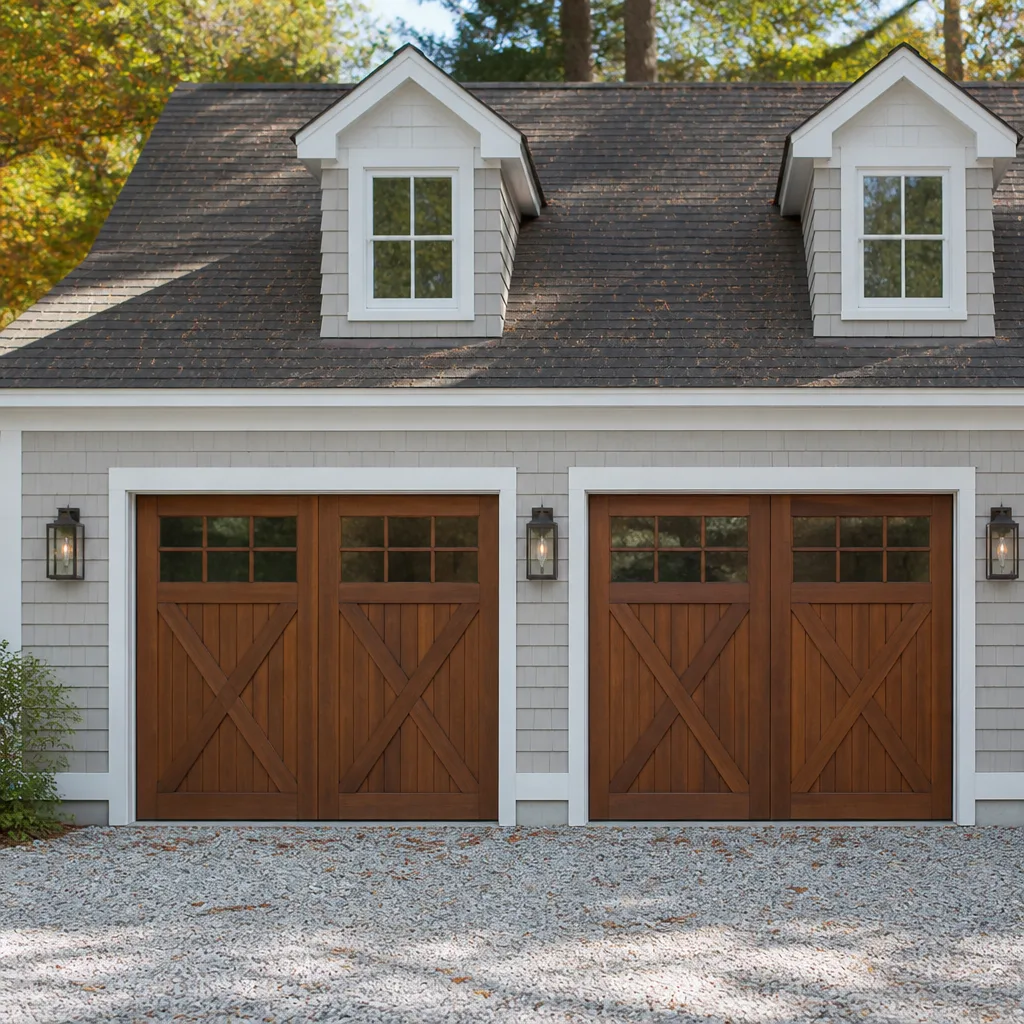 Carriage house
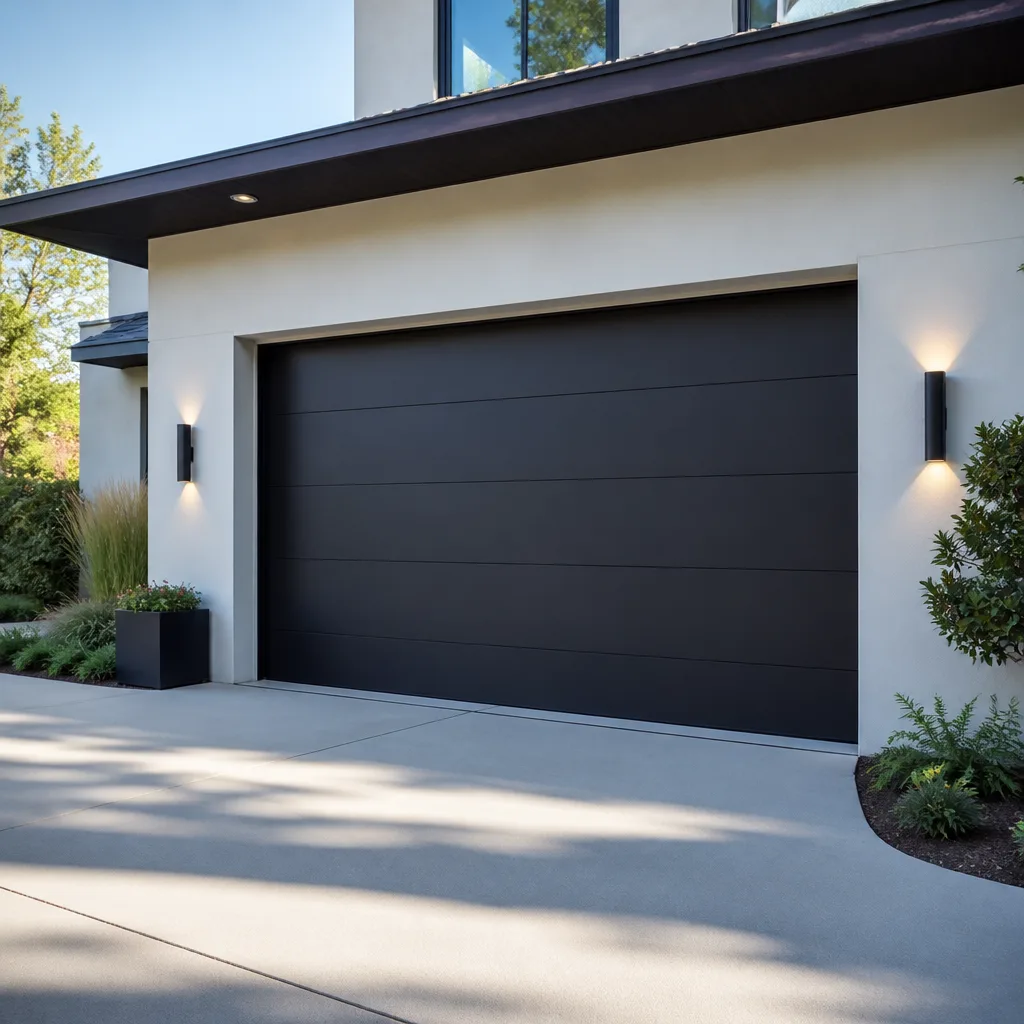 Modern flush
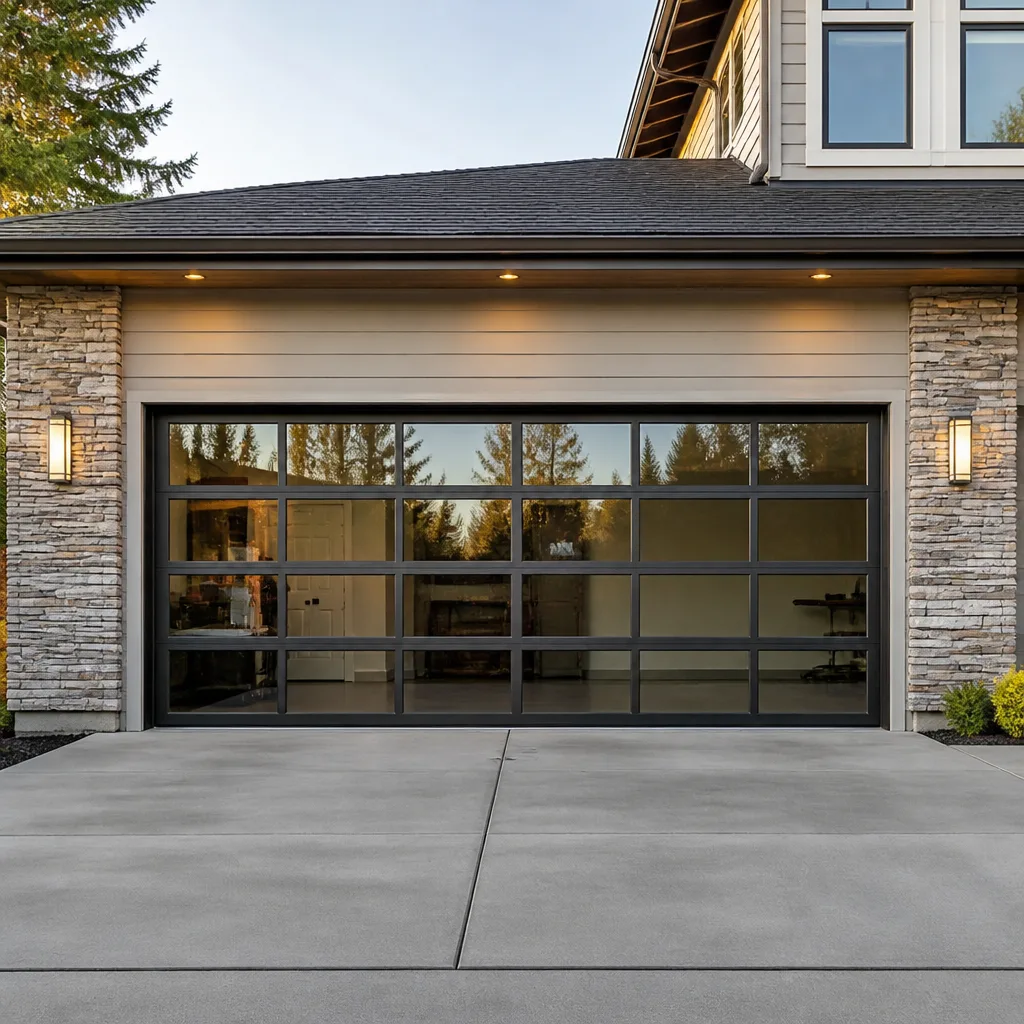 Full-view glass
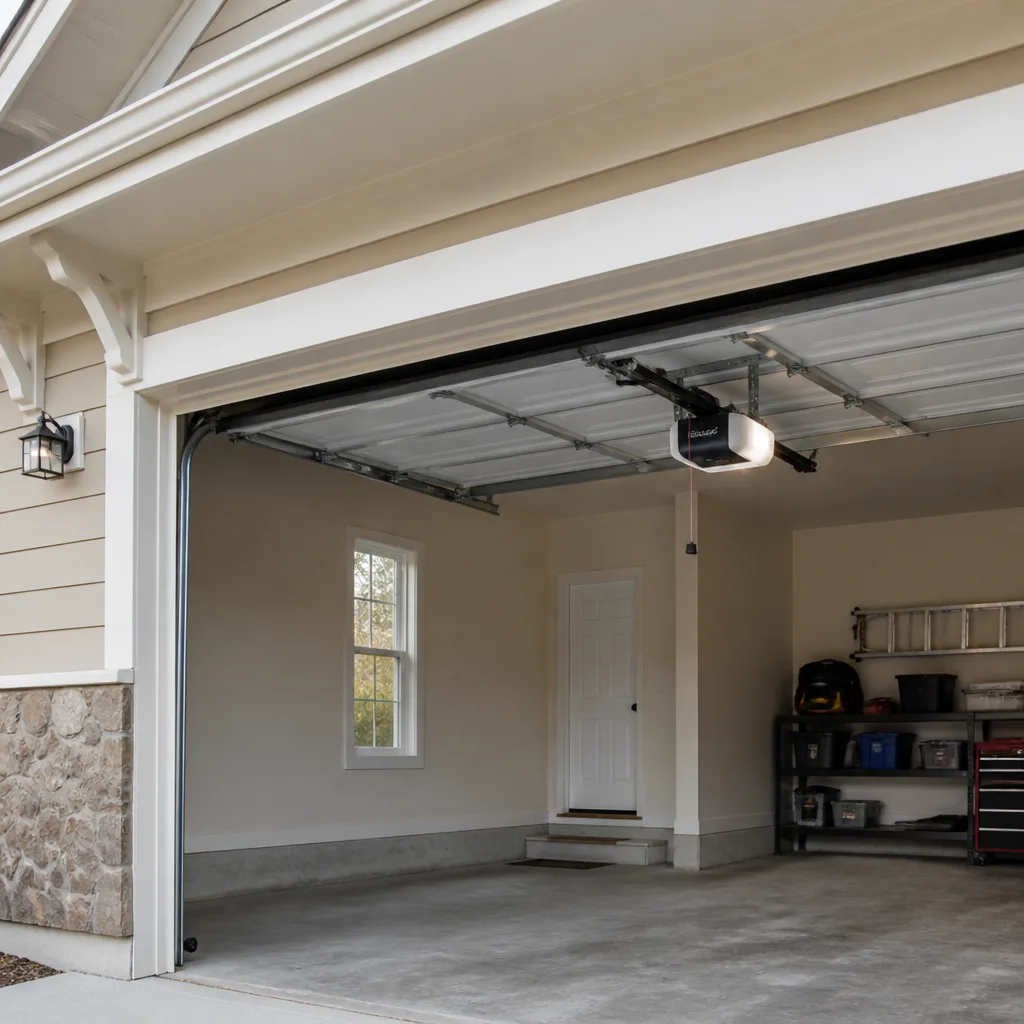 LiftMaster openers
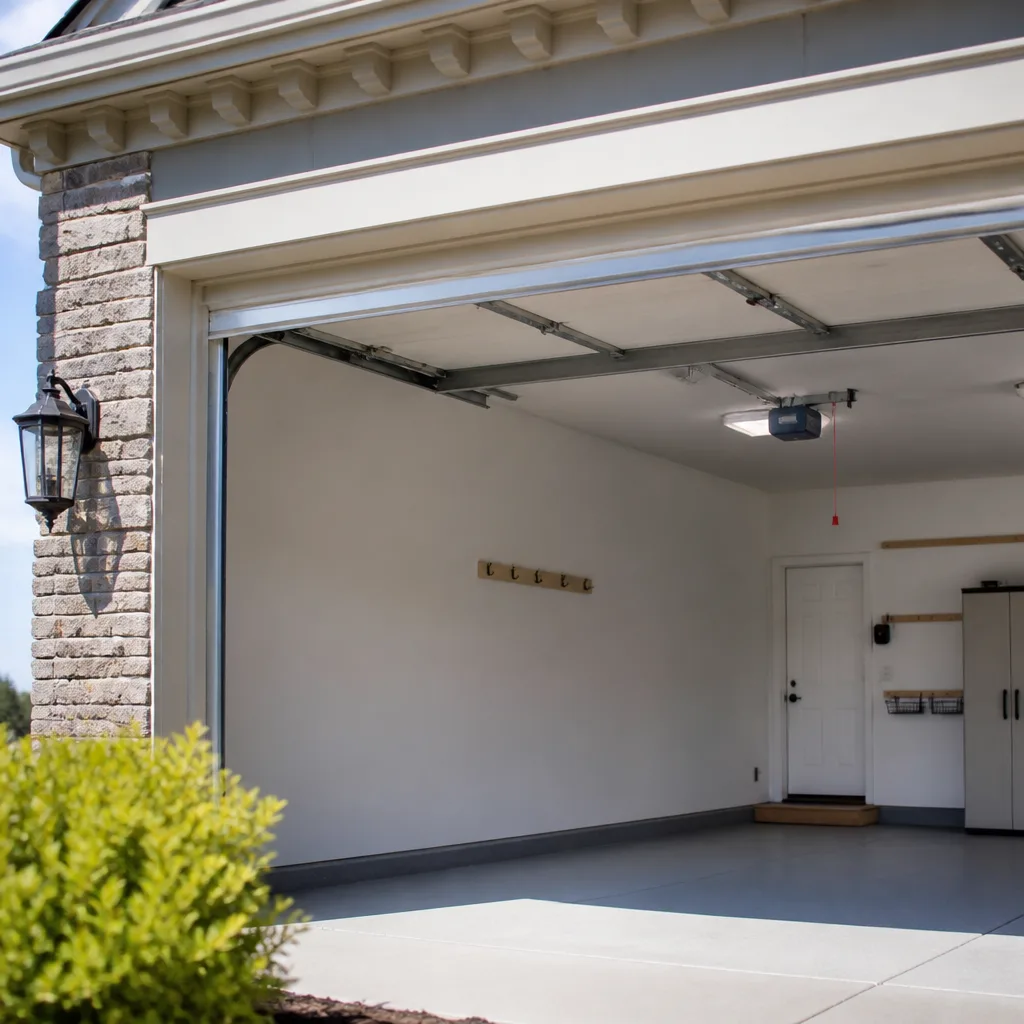 Chamberlain openers
Full 25-point door and opener safety check with every visit - springs, cables, rollers, tracks, and your LiftMaster or Chamberlain opener included
You get a price before we start. It does not change when the pro arrives.
Get your free estimateGarage Door Warning Signs: A Bushwick Homeowner’s Reference Guide
A garage door doesn’t just stop working. It slows down, gets louder, drifts off-track, or reverses for no visible reason, usually for weeks before the actual failure. Most homeowners in Bushwick write those changes off as normal quirks, a little rattle here, a lazy opener there, until the morning the door won’t move at all and the car is trapped inside. This guide is written to help you read those early signals accurately and decide what needs same-week attention, what needs same-day attention, and what can honestly wait. Mention a garage door in Bushwick and most people think of one thing: getting the car out. The guide below is about everything the door was trying to tell you first.
Quick Answer
The most common garage door warning signs are grinding, popping, or squealing noises, a door that travels slowly or reverses without an obstruction, visible cable fraying, a gap at the floor on one side, and opener motor noise with no door movement. Any sign involving a broken spring, a snapped or frayed cable, or a door hanging off its track means stop using the door immediately and call a professional, because these are high-tension components that can cause serious injury.
Styles & brands we work with
- Raised-panel steel
- Carriage house
- Modern flush
- Full-view glass
- LiftMaster openers
- Chamberlain openers
Table of Contents
- What the Sounds Mean: Grinding vs. Popping vs. Squealing
- Visual Warning Signs You Can Spot Without Tools
- Behavioral Red Flags: Slow Travel, Reversal, Dead Openers
- The Urgency Triage: Stop Using the Door vs. Wait for a Scheduled Visit
- How Bushwick Conditions Accelerate Certain Failures
- Brand-Specific Notes: Amarr, Wayne Dalton, Craftsman, Raynor
- Seasonal Patterns and What Humidity Does to Your Hardware
- What Warning Signs Cost to Fix: Estimated Ranges
What the Sounds Mean: Grinding vs. Popping vs. Squealing
Garage doors make noise. That’s normal. What matters is the kind of noise and when it started. A door that has always had a low rumble is one thing. A door that got noticeably louder over the last month is telling you something is wearing out. In our experience across Bushwick, sound is usually the first signal a homeowner notices and the last one they act on. Here’s how to translate what you’re hearing.
- Grinding: A harsh, metal-on-metal scrape usually points to dry or worn rollers, a bent track, or a torsion spring that has lost tension. If the door struggles while grinding, stop and call us.
- Popping: A sharp pop, often once per cycle, is often a symptom of a loose spring, a cable slipping its drum, or a hinge pulling free of the door panel. Popping should never be ignored, because it can be the moment before a cable fails.
- Squealing: A high-pitched squeal is usually a roller or hinge that needs lubrication, or a worn nylon roller. It’s the least urgent of the three, but it escalates if neglected.
- Banging or slamming: If the door slams down rather than easing into the floor, the springs are no longer counterbalancing the door’s weight. This is a same-day call.
- Clicking from the opener: A click with no movement usually means the opener is trying to engage but the door is jammed, or the gear inside the unit has stripped.
If you hear popping or banging and the door is hanging unevenly, stop using it. We can walk through what you’re hearing and get a technician out to Garage Door Repair Bushwick.
Visual Warning Signs You Can Spot Without Tools
You don’t need a gauge to spot a garage door in trouble. A slow walk around the door, a look up at the springs, and a glance at the floor line will tell you most of what you need to know. Look at these five things each time you park:
- Cable fraying: Look at the steel cables running down each side. A healthy cable is smooth and taut. Frayed strands, kinks, or a cable hanging slack mean stop using the door.
- Uneven gap at the floor: Close the door and look at the line where it meets the ground. A gap on one side means the door is off-balance or a spring has weakened.
- Visible spring gaps: Look at the torsion spring (the horizontal coil above the door). A gap in the coil means the spring has broken and the door is now supported by the opener alone.
- Bent or twisted tracks: Stand inside and look up each vertical rail. Bent track is usually the result of a vehicle bump or a door that ran into an obstruction.
- Cracked or separated panels: Panels that have pulled apart at the seams or cracked near a hinge indicate stress, and on an Amarr or Raynor door, a failed hinge plate is often the cause.
One that many people miss: rust-colored dust near the spring or on the floor below it. That’s often the beginning of a spring failure rather than a mid-cycle break, which gives you a chance to catch it before it fails completely. If you see any of the first three, call us before you cycle the door again. A garage door repair visit scheduled today is far cheaper than an emergency call at the wrong hour.
Behavioral Red Flags: Slow Travel, Reversal, Dead Openers
The door doesn’t have to make an alarming noise to be telling you something is wrong. How it moves, and whether it moves at all, is the second layer of evidence. Here’s what each behavior means mechanically.
- Slow travel speed: If the door has gotten noticeably slower over weeks, the opener motor is working harder than it should. Common causes are worn rollers, a weakening spring, or an opener that’s been set to the wrong travel limit.
- Reversal without obstruction: If the door closes, stops, and reopens with nothing in the way, the safety sensors are misaligned or dirty, or the opener’s force setting is too low. On a LiftMaster or Chamberlain unit, this is often a simple sensor alignment, but on older Craftsman openers it can also be the logic board.
- Opener runs, door doesn’t move: You hear the motor, but the door stays put. That’s usually a broken spring, a snapped cable, or a stripped gear in the opener. Do not keep pressing the button. The opener will burn itself out trying to lift a door it can’t lift.
- Door stops halfway up: Often a sign of a spring that’s lost tension or rollers that have worn flat. The opener isn’t strong enough to overcome the resistance.
- Opening by itself: Rare but serious. A ghost-opening door points to a short in the wall control wiring, a failing logic board, or a signal from a neighboring remote. Stop using it until it’s diagnosed.
If the opener is the problem, our garage door opener repair covers LiftMaster, Chamberlain, Genie, and Craftsman systems, including smart-home models, and can typically diagnose the issue in a single visit.
The Urgency Triage: Stop Using the Door vs. Wait for a Scheduled Visit
Not every warning sign is an emergency. Learning which is which is the whole point of the guide, because some signs mean stop the door today, and some can wait for a scheduled appointment without any added risk.
Stop using the door immediately if you notice:
- A snapped or frayed torsion spring (visible gap in the coil)
- A cable that is loose, kinked, or frayed
- The door is hanging off its track or visibly crooked
- The door came down hard or fast on its own
- A high-tension spring or cable snapped and the door is unsupported
These involve high-tension components under hundreds of pounds of stored force. Never try to lift a door with a broken spring and never reach for a winding bar yourself. A garage door spring can cause serious injury, and tuning one requires training and special tools.
You can safely wait for a scheduled visit if you notice:
- Squealing or grinding that hasn’t changed the door’s motion
- Slow travel that is consistent (no sticking, no reversal)
- A single noisy roller or hinge
- Opener clicks or sensor misalignment that you can fix by wiping the lens
- Rust-colored dust near the spring without an actual break
When in doubt, call. We work on the brand already in your garage, so a quick phone diagnosis often tells us whether to send a technician today or to book you a scheduled slot.
How Bushwick Conditions Accelerate Certain Failures
Garage doors fail faster in some places than others, and Bushwick’s mix of alleys, older housing stock, and summer humidity creates a specific pattern of wear. Three local conditions stand out.
Alley garages and debris exposure. Many Bushwick homes have garage doors opening onto a shared alley rather than a driveway. That means more air movement, more grit, and more small debris working its way into rollers and hinges over time. We’ve seen doors on alley-facing garages wear rollers noticeably faster than doors on protected exposures.
Humidity and nearby Newtown Creek. The industrial corridor around Newtown Creek keeps summer humidity elevated in the surrounding blocks. That moisture works on steel hardware: hinges, springs, cables, and track bolts. Rust-colored dust near a spring is a common finding in this part of Bushwick, and it usually means spring failure is ahead rather than behind.
Older doors, older parts. A lot of Bushwick garages still run original doors from decades past, often a Wayne Dalton or an older Craftsman setup. Those systems often need a specific part, not a generic stand-in, which is why brand fluency matters on a diagnostic visit. We service eight major manufacturers: LiftMaster, Chamberlain, Genie, Clopay, Amarr, Wayne Dalton, Craftsman, and Raynor.
Brand-Specific Notes: Amarr, Wayne Dalton, Craftsman, Raynor
Garage doors look alike from the street. Up close, they don’t. Each brand has quirks worth knowing, especially if you’re troubleshooting a warning sign and deciding whether it’s a quick fix or something structural.
- Amarr: Amarr doors often use a specific hinge style at the panel joints. When you spot cracking at a hinge on an Amarr door, the cause is usually stress at the joint rather than a defective panel.
- Wayne Dalton: Wayne Dalton doors commonly use a proprietary spring and roller setup. If you’re noticing slow travel on a Wayne Dalton door and a technician suggests a generic spring, ask whether the model needs the original fit.
- Craftsman: The opener is often older than the door. Craftsman openers still in service commonly need gear replacement rather than a full unit swap, especially when you hear the motor with no door movement.
- Raynor: Raynor doors tend to hold up well on tracks but show spring wear sooner. A popping sound from a Raynor door often indicates spring tension loss rather than a hinge issue.
If you haven’t identified the brand, look for a sticker on the inside of the top panel or on the opener. It should list the model. If you can’t find one, tell us what you see and we’ll usually recognize it by the hardware. If a door is beyond reliable repair, a full garage door installation is the natural next step, and the same team handles it, so you’re not juggling contractors.
Seasonal Patterns and What Humidity Does to Your Hardware
Garage door problems aren’t evenly distributed across the year. In Bushwick, we see a predictable pattern tied to the seasons and the humidity they bring.
- Late winter into early spring: Doors that sat through cold months often develop spring tension problems. Cold steel contracts, and a spring that was marginal in the fall can be at the edge by spring.
- Summer humidity: Elevated humidity from June through September works on steel hardware. Watch for squealing or rust dust near the spring, both of which point to accelerated wear.
- Fall shift in temperature: Hinges and track bolts loosen as temperature swings. A rattle that appears each fall is often a loose track, not a failing spring.
- Winter cold snaps: Nylon rollers get brittle in cold. A door that squeals only in winter probably has a roller about to fail.
None of these is a reason to panic. They’re a reason to look at the door carefully at the change of seasons, ideally before the first cold snap or the first humid stretch. A little attention in the fall makes spring failures less likely.
What Warning Signs Cost to Fix: Estimated Ranges
Warning signs cost less to fix than failures, and the reason is simple: you catch the problem before it takes other parts down with it. A door with a frayed cable caught early is usually a cable and spring job. A door with a frayed cable that snaps and bends the track is a much larger repair. Here are the typical estimated ranges for reading a warning sign correctly.
| Symptom / Job | Typical Estimated Range |
|---|---|
| Single torsion spring replacement | $150 – $300 |
| Matched pair of torsion springs (usually replaced together) | $300 – $600 |
| Cable replacement (per side) | $100 – $200 |
| Roller replacement (per door, typical) | $100 – $200 |
| Track adjustment or realignment | $100 – $250 |
| Opener diagnosis and minor repair | $100 – $250 |
| Opener replacement (unit plus install) | $300 – $700 |
These ranges are estimates, and every job is different. A spring quote covers one spring; if your door has a matched pair and both are worn, we’ll quote the pair because replacing one on a matched set usually leaves the door unbalanced. The written estimate you agree to sets the final price, and we don’t start a job until you’ve approved it. We offer free estimates in Bushwick and will give you a firm number before the technician picks up a tool.
Common Mistakes to Avoid
- Ignoring a broken spring and running the opener anyway. The opener will burn itself out trying to lift a door it can’t lift, and that turns a simple spring swap into a spring-plus-opener job.
- Lubricating a squealing spring instead of inspecting it. A squeal from a roller is a lubrication issue; a squeal from the spring is often a sign of tension loss. The two sound similar from inside the house and are handled very differently.
- Forcing a misaligned door back onto the track. This is the most common cause of bent panels and injured hands in Bushwick alley garages, and it rarely works on a door that has come off more than a few inches.
- Using generic parts on a branded door. An Amarr or Wayne Dalton door often needs model-specific springs and hinges. A generic part fits some and fails early on others.
- Trusting a safety sensor that looks clean but isn’t aimed. Reversal without obstruction is a common call, and often the sensor is simply out of alignment, not broken.
- Waiting through winter on a spring that was already marginal in fall. Cold weather exposes weakened springs quickly, and a call in the fall is usually enough to avoid a winter emergency.
- Calling a general handyman for a spring. Torsion springs are one of the highest-risk components on the door. This isn’t a job for a generalist.
See the difference
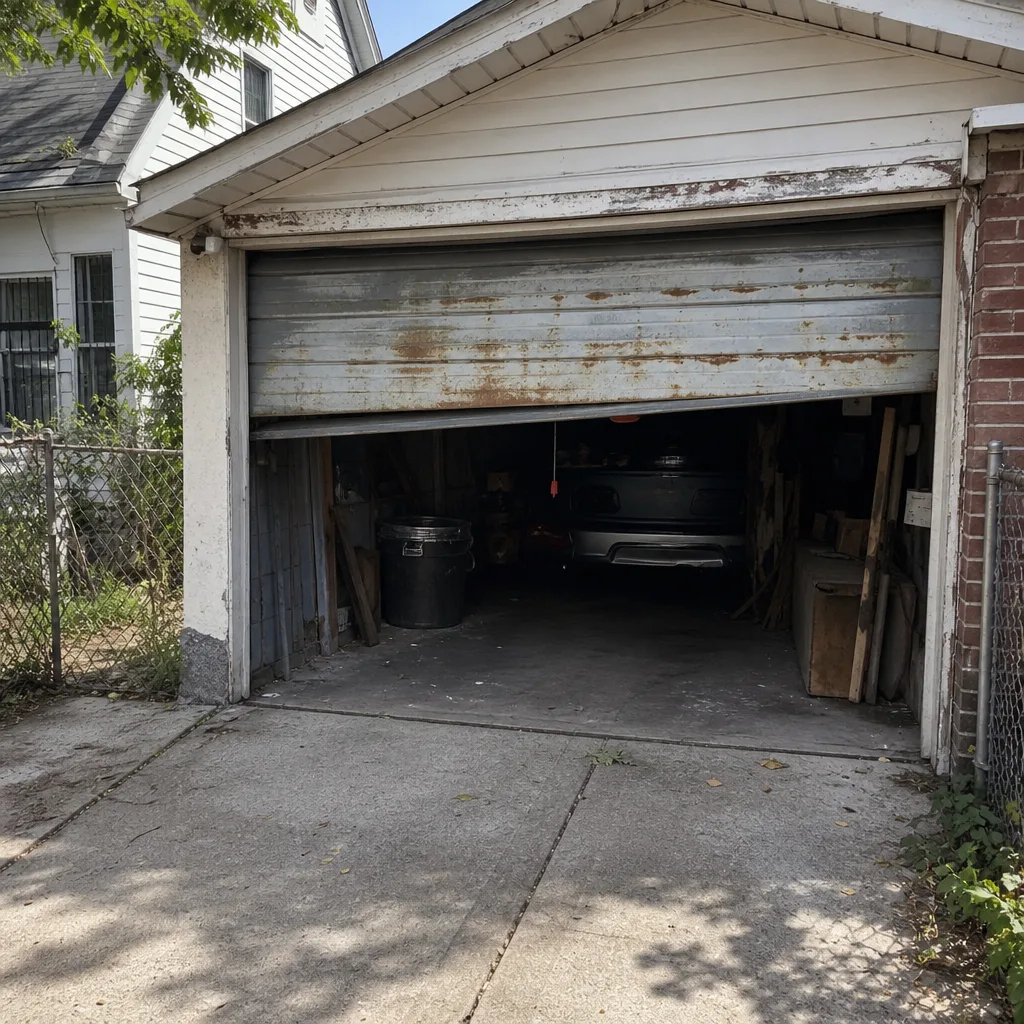 Before
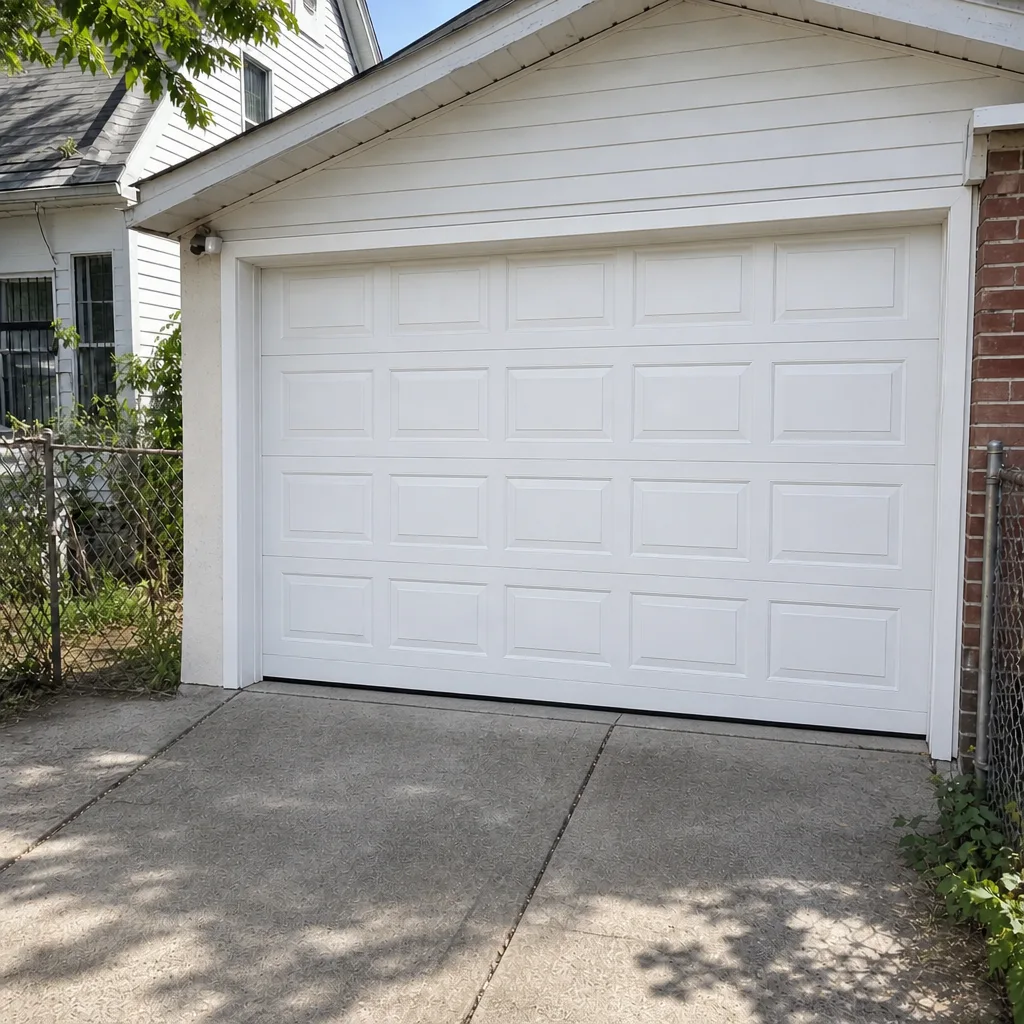 After
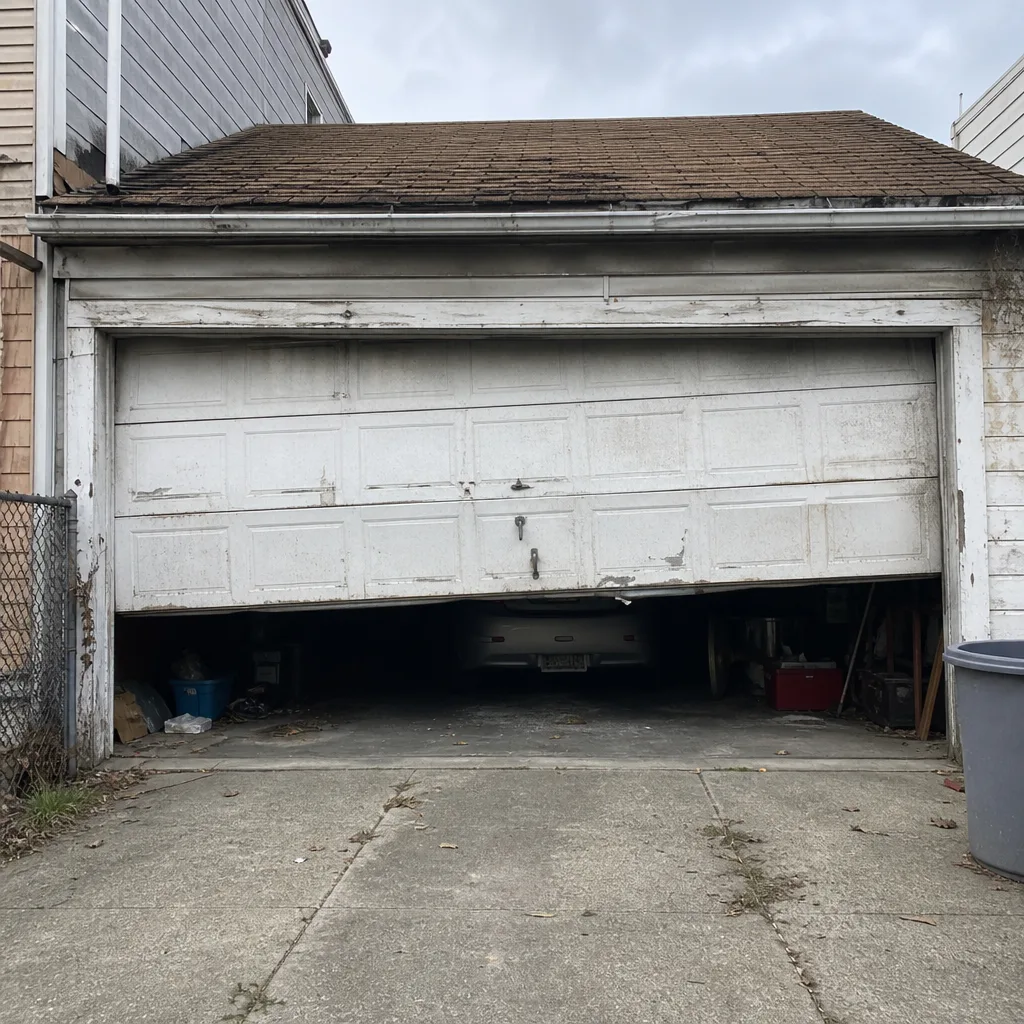 Before
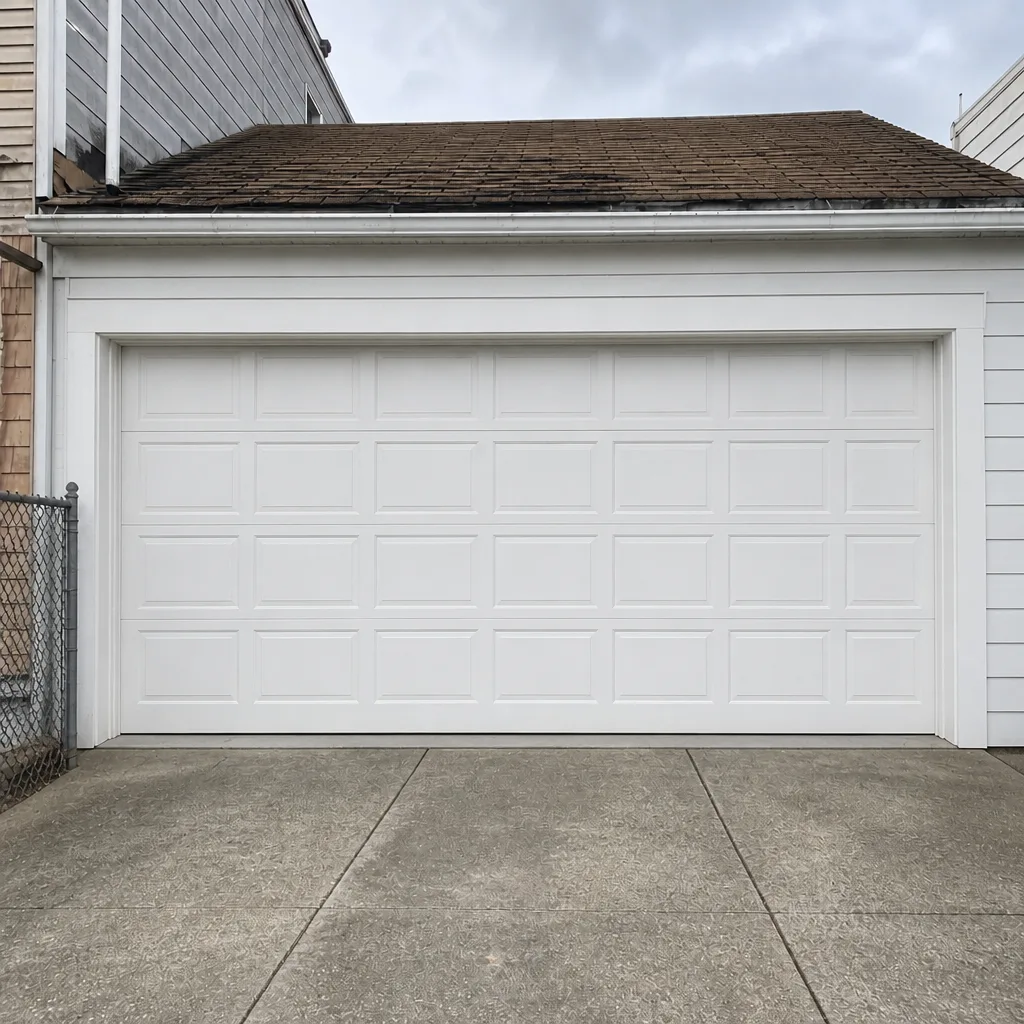 After
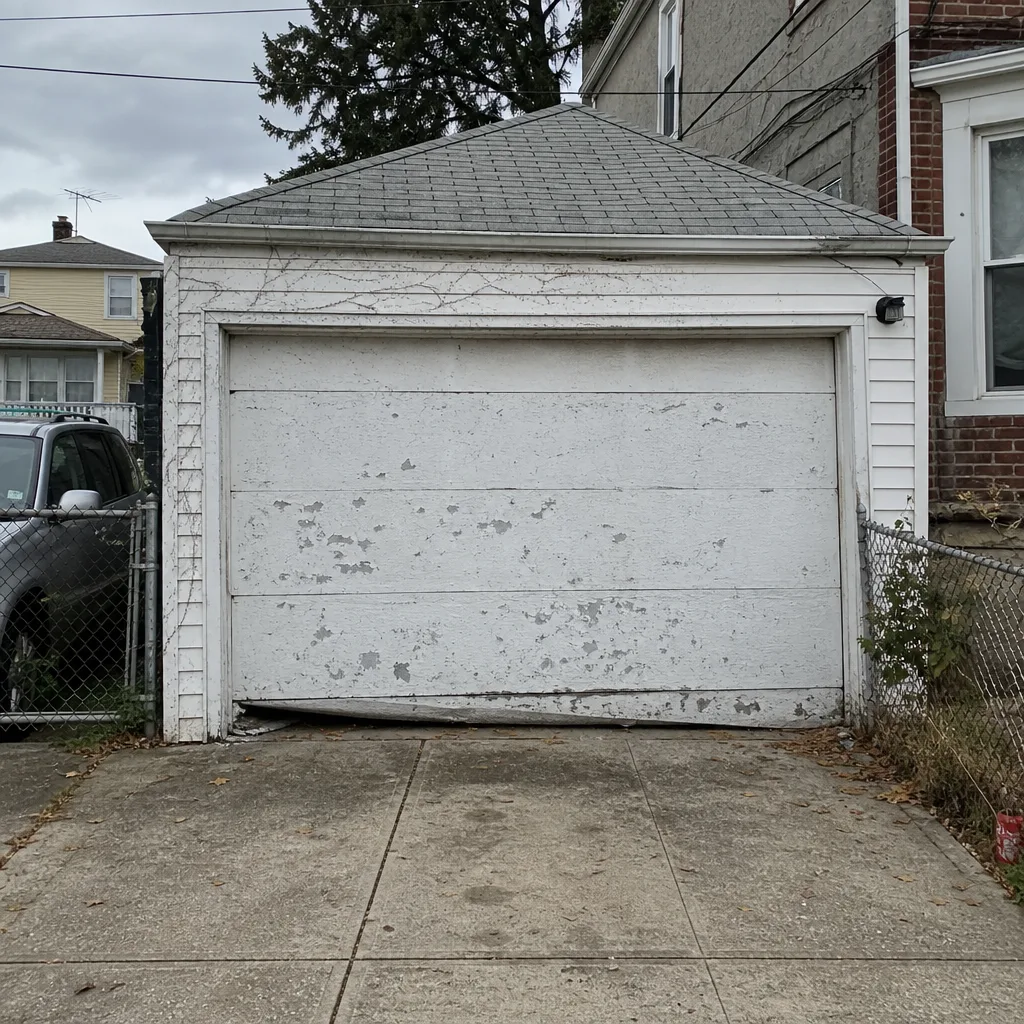 Before
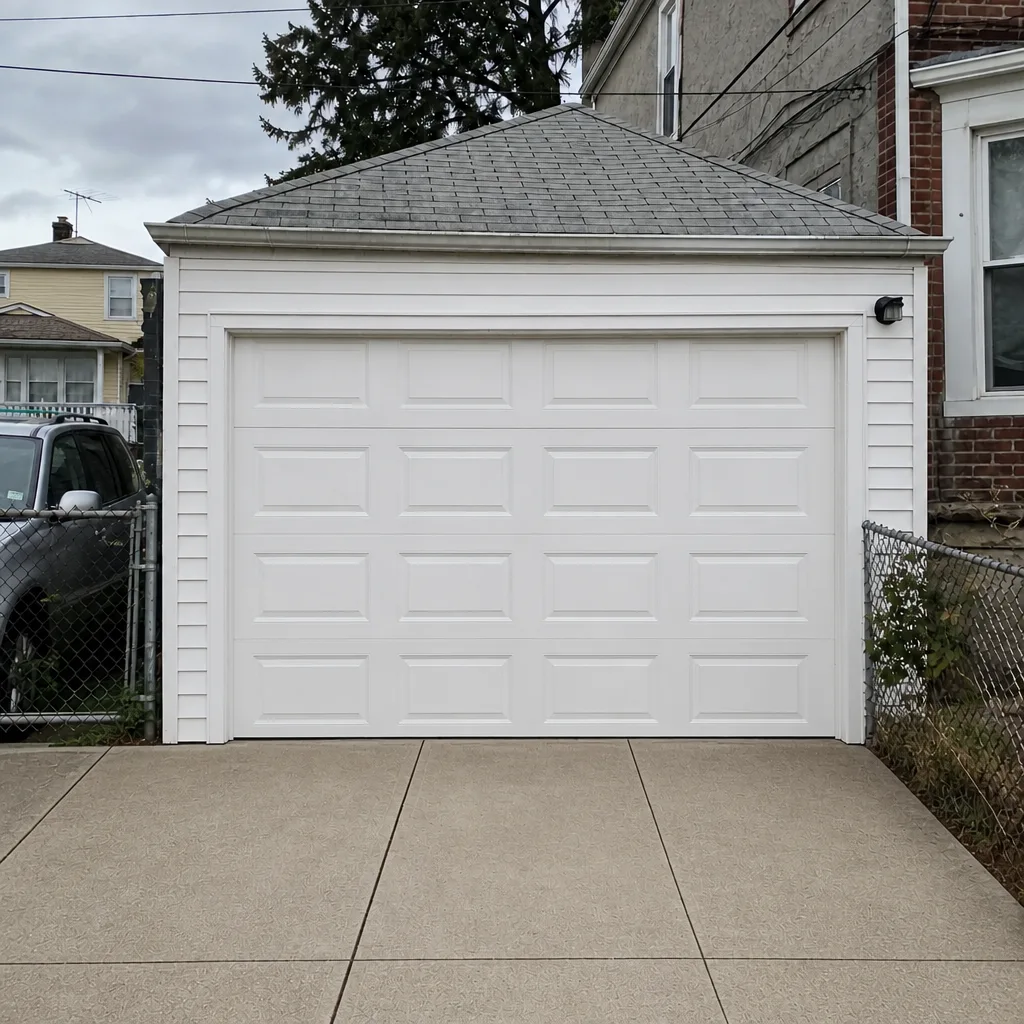 After
When to Call a Professional
Call us when you notice a broken spring, a frayed or slack cable, a door hanging off its track, a door that reverses with nothing in the way, an opener that runs without moving the door, or a door that has become noticeably louder or slower over the last month. Any of these signs should trigger a diagnostic visit. Our technicians have up to 15 years of experience and are trained on the brands most often installed in Bushwick garages, including LiftMaster, Chamberlain, Genie, Clopay, Amarr, Wayne Dalton, Craftsman, and Raynor. Garage Door Repair Bushwick offers free estimates in Bushwick. Call (888) 839-3311 to book a diagnostic visit or to talk through what you’re hearing. For urgent failures, we additionally offer emergency garage door response for time-sensitive problems.
Frequently Asked Questions
A noticeable increase in noise is usually the first sign: grinding, popping, or a louder rumble than the door used to make. That’s often rollers, hinges, or a weakening spring. Call (888) 839-3311 for a diagnostic visit and free estimate.
No. Do not use the door if the spring has visibly broken, and do not try to lift it by hand. The door’s weight is no longer counterbalanced, so it can come down hard. Call us for a same-visit repair; spring repair is a dedicated service we handle.
That’s nearly always the safety sensors: they’re misaligned, dirty, or receiving a weak signal. On a LiftMaster or Chamberlain opener, a simple sensor alignment usually fixes it. If it keeps happening, the logic board may need a technician’s look.
Broken spring, frayed cable, door off its track, or a door that has come down hard are all emergencies. Squealing rollers, slow travel, or a sensor issue can wait for a scheduled visit. When in doubt, call (888) 839-3311 and we’ll talk it through.
Yes, alley-facing garages see more grit in rollers and hinges, and the humidity around nearby Newtown Creek accelerates corrosion on spring hardware. Watch for rust-colored dust under the spring as a sign that failure is ahead.
Usually. A frayed cable caught early is a cable and spring job, whereas a snapped cable that bends the track is a much bigger repair. The written estimate always shows the exact price before work begins, and estimates are free. Call (888) 839-3311.
The Bottom Line
A garage door rarely fails without warning. It gets louder, slower, or visibly off before it stops. The signs are there if you know what to look for: grinding, popping, and squealing point to different parts; frayed cables and uneven floor gaps and spring coil gaps are visible from the ground; slow travel and reversal and a dead opener are mechanical signals you can read without tools. Then triage: broken spring, snapped cable, or a crooked door means stop using it today, and a phone call before anything else. Smaller signs can wait for a scheduled visit. If you’re not sure where a symptom falls, call (888) 839-3311 for a free estimate. We’ll tell you plainly what the door needs and what it can wait for.
Written by the team at Garage Door Repair Bushwick.